The New Currency of Curiosity: Why Elite Travelers Are Trading Itineraries for Expert Botanical Guides

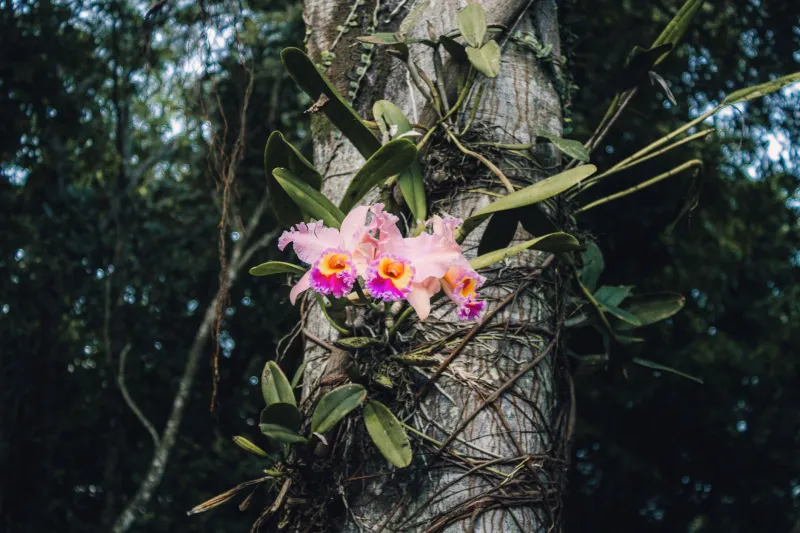
Photo by Photo by Kate Darmody on Unsplash on Unsplash
Not long ago, the markers of a truly exceptional island getaway were fairly predictable: an overwater bungalow, a Michelin-pedigreed chef, perhaps a chartered yacht waiting at the dock. These remain appealing, of course. Yet among a growing cohort of ultra-high-net-worth travelers — those for whom conventional luxury has become almost unremarkable — a new status symbol has quietly taken root. It arrives not in the form of a material acquisition, but in the company of a person: the private orchid botanist.
This specialist — part scientist, part storyteller, part wilderness interpreter — has emerged as one of the most sought-after additions to bespoke island itineraries. And the demand, by all accounts, shows no sign of abating.
Knowledge as the Ultimate Luxury
The logic, once examined, is straightforward. In a world where affluent travelers can book virtually any experience with sufficient advance notice and financial resources, genuine scarcity has shifted from places to people. A private island can be rented. A Michelin-starred dinner can be arranged on a remote atoll. But the depth of understanding possessed by a botanist who has spent decades studying the orchid ecosystems of, say, the Philippines' cloud forests or the volcanic slopes of Hawaii — that cannot be replicated or purchased off a menu.
"What my clients are really buying is fluency," explains one veteran horticultural guide who leads exclusive expeditions across Southeast Asian archipelagos. "They want to walk into a forest and understand what they are seeing. The orchid becomes a doorway into everything else — the geology, the rainfall patterns, the indigenous culture, the conservation politics. That depth of context is what people with means are craving right now."
This sentiment is echoed across the industry. Travel consultants who specialize in high-end botanical journeys report that requests for dedicated orchid specialists have increased substantially over the past three years. The profile of the client has also shifted — while passionate plant collectors remain a core constituency, a new wave of travelers with backgrounds in finance, technology, and the arts are arriving with intellectual curiosity as their primary motivation rather than any intention to acquire specimens.
The Anatomy of a Bespoke Botanical Experience
What does a day in the company of a private orchid guide actually look like? The answer varies considerably depending on the destination and the guide's particular expertise, but certain elements tend to recur.
Mornings often begin before the heat of the day settles in, when forest light filters through the canopy at its most luminous and the humidity carries the faint, complex fragrance of epiphytic blooms. The guide moves deliberately, pausing to examine root structures on ancient trees, interpreting the subtle ecological relationships between orchid species and their pollinators, drawing connections between what the eye perceives and what centuries of botanical science have documented.
In destinations such as Borneo, Madagascar, or the Hawaiian archipelago, these mornings can yield encounters with orchid species so rarely observed in their natural habitat that even seasoned travelers find themselves genuinely moved. The guide's role in that moment — providing context, restraint, and reverence — is what transforms a pleasant nature walk into something closer to a profound encounter.
Afternoons might shift to something more contemplative: a private workshop on orchid propagation at a local conservation nursery, a conversation with indigenous cultivators who have maintained horticultural traditions across generations, or simply a quiet period of sketching and reflection facilitated by the guide's encyclopedic commentary.
The Specialists Themselves
The individuals commanding premium rates for this kind of work tend to share certain qualities. Most hold advanced degrees in botany, ecology, or related disciplines, and many have contributed to peer-reviewed research or conservation initiatives. Yet academic credentials alone do not account for their appeal. What distinguishes the most sought-after guides is an ability to translate technical knowledge into narrative — to make the taxonomy of a rare Dendrobium feel as gripping as a well-told story.
Some of these specialists work independently, cultivating relationships with a small circle of returning clients who follow them to new destinations year after year. Others are affiliated with luxury travel operators who have recognized the commercial potential of botanical expertise and have begun building dedicated programs around it. A handful of high-end island resorts — particularly in Bali, Sri Lanka, and the Caribbean — have begun employing resident botanists as a permanent amenity, positioning them alongside private chefs and wellness practitioners as essential members of the guest experience team.
The compensation reflects the market's enthusiasm. Experienced botanical guides working with private clients in this space command daily rates that rival those of other elite travel specialists, and the most prominent figures in the field maintain waiting lists that extend well into the following year.
Why Orchids, Specifically?
One might reasonably ask why the orchid, above all other botanical subjects, has become the focal point of this trend. The answer is partly ecological and partly cultural.
Orchids represent the largest family of flowering plants on Earth, with an estimated 28,000 species distributed across nearly every habitat on the planet — with tropical islands accounting for a disproportionate share of the most spectacular examples. Their biological complexity, their intimate relationships with specific pollinators, and their remarkable capacity for adaptation make them endlessly instructive subjects. A guide who truly knows orchids knows, by extension, an enormous amount about the ecosystems they inhabit.
Culturally, orchids carry a weight of symbolism and historical fascination that few other plants can match. The Victorian-era obsession with orchid hunting — the so-called "orchidelirium" that sent collectors to dangerous extremes in pursuit of rare specimens — lends the subject a romantic, adventurous dimension that resonates with travelers drawn to experiences that feel both intellectually serious and genuinely exciting.
A Shift in What Prestige Means
Perhaps most significantly, the rise of the private botanical guide reflects a broader recalibration of what constitutes prestige among today's most affluent travelers. The conspicuous consumption of earlier decades — the larger yacht, the more remote private island — has given way, in many circles, to a quieter form of distinction rooted in knowledge, access, and authentic engagement with the natural world.
To have spent a morning in the cloud forest of a remote Philippine island, guided by a botanist whose expertise is recognized internationally, learning to distinguish between species that most people will never encounter in their lifetimes — this has become, for a certain kind of traveler, worth more than any object money can purchase.
At Orchid Isle, we have long believed that the most meaningful encounters with tropical island destinations are those that go beyond the surface. The emergence of the private botanical specialist as a defining feature of luxury travel suggests that a growing number of discerning travelers have arrived at the same conclusion. The orchid, as always, is simply the beginning.