Between Admiration and Acquisition: The Ethical Crossroads Facing Today's Orchid-Obsessed Traveler
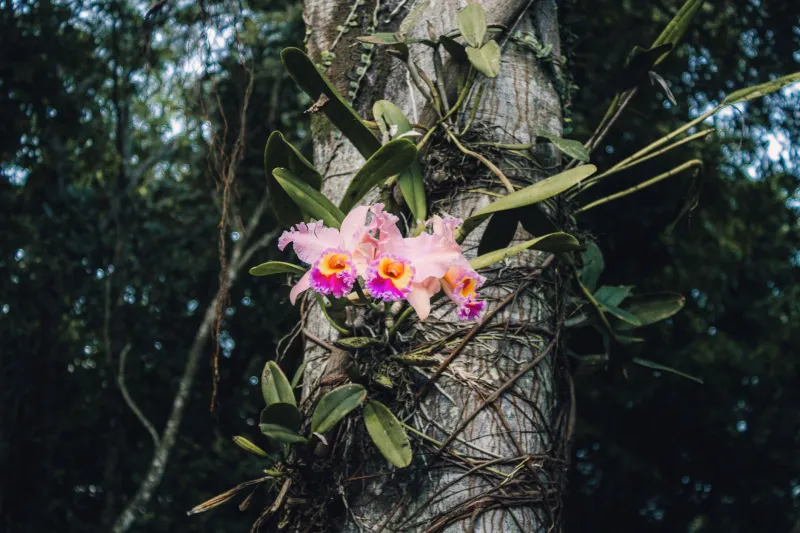
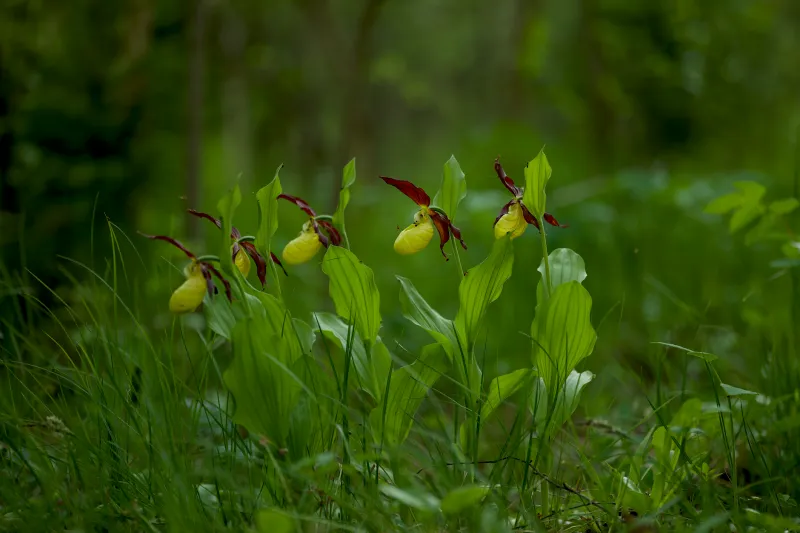
There is a particular quality of silence that settles over a traveler the moment they encounter a wild orchid in its native habitat. Perhaps it is the improbability of the bloom — a Paphiopedilum rothschildianum clinging to a limestone cliff in Borneo, or a ghost orchid suspended in the humid air of a Cuban swamp. For many visitors, that silence is quickly followed by something less serene: an almost involuntary impulse to take it home.
This is the orchid collector's dilemma, and it is far more common — and far more consequential — than the luxury travel industry has historically been willing to acknowledge.
The Psychology of Botanical Desire
Dr. Marguerite Holloway, an environmental psychologist who has consulted with several high-end ecotourism operators in Southeast Asia, describes the collector's impulse as deeply rooted in human evolutionary psychology. "Rare, beautiful objects trigger what researchers call the 'acquisition urge,' a neurological response linked to status, mastery, and the desire to preserve a fleeting experience," she explains. "Orchids, with their extraordinary variety and their reputation for being notoriously difficult to cultivate, amplify that response considerably."
For affluent travelers accustomed to obtaining what they desire, the frustration of encountering something genuinely unattainable can be disorienting. A first-class cabin, a private villa, a Michelin-starred dinner — these are luxuries that money reliably unlocks. A wild Dracula orchid blooming in the cloud forests of Ecuador operates by entirely different rules. It exists on its own terms, indifferent to purchasing power.
This tension, paradoxically, makes the orchid even more desirable.
The Hidden Cost of the Collector's Trophy
The consequences of unchecked collecting have been documented extensively by conservation organizations, though they remain underreported in mainstream travel media. According to the Convention on International Trade in Endangered Species (CITES), orchids represent the largest single plant family listed under international trade protections, with over 28,000 species subject to varying degrees of regulation. Despite these protections, illegal collection continues to drain wild populations at an alarming rate.
"What most travelers don't appreciate is that removing a single specimen from a wild population can have cascading effects," says Dr. Samuel Osei, a tropical botanist affiliated with a conservation program operating across several Pacific island nations. "Many island orchid species have extremely limited ranges — sometimes a single mountain slope or a particular forest microclimate. The loss of even a handful of plants can compromise the genetic diversity of an entire population."
The problem is compounded by the orchid's slow reproductive cycle. Unlike annuals that replenish themselves within a single growing season, many rare island orchids require years — sometimes decades — to reach maturity. A plant removed today may represent an irreplaceable loss that will not become fully apparent for a generation.
For luxury travelers who consider themselves environmentally conscious, this reality demands a degree of self-examination that can be genuinely uncomfortable.
What High-End Destinations Are Doing Differently
Forward-thinking resorts and tour operators have recognized this ethical tension not as a problem to be avoided, but as an opportunity to deepen the traveler's engagement with the natural world. Across the Caribbean, the Philippines, and the island archipelagos of the Indian Ocean, a new model of orchid-centered luxury tourism is emerging — one that satisfies the collector's impulse without compromising the ecosystems that make the experience possible.
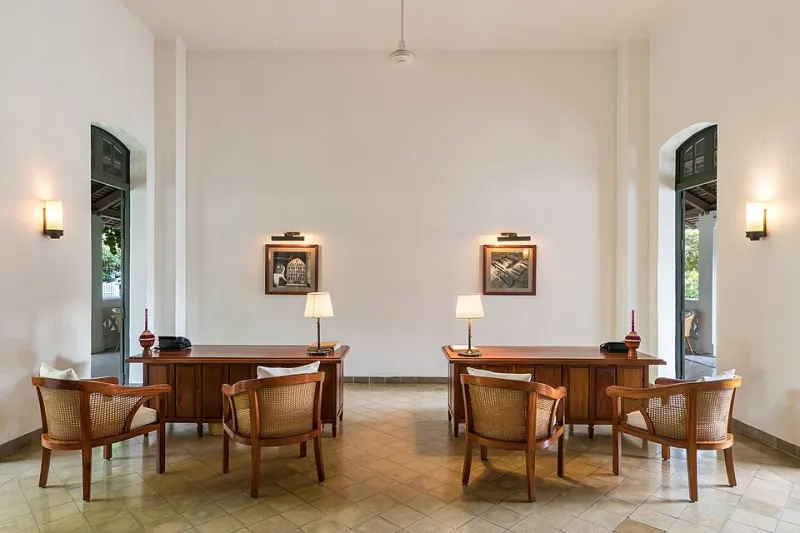
At one acclaimed eco-resort in the highlands of Sri Lanka, guests are offered what the property describes as a "provenance experience": a multi-day immersion with the resort's resident botanist that culminates in the adoption — rather than the acquisition — of a named wild orchid plant within the resort's conservation corridor. Guests receive a certificate of stewardship, GPS coordinates for their specific plant, and annual photographic updates on its condition. The orchid remains precisely where it belongs. The traveler, meanwhile, carries home something arguably more meaningful than a potted specimen: a living connection to a place.
Similar programs have been developed in Hawaii, where native orchid species face particular pressure from both habitat loss and collector demand. Several luxury botanical lodges on the Big Island now offer guests the opportunity to participate in supervised propagation workshops, producing laboratory-grown specimens through tissue culture — a process that satisfies the desire for ownership while placing zero additional strain on wild populations.
"We found that what our guests actually wanted wasn't the plant itself," reflects one resort director who oversees such a program. "What they wanted was the story, the expertise, the sense of having participated in something rare and meaningful. When we reframed the experience around stewardship rather than possession, the response was extraordinary."
The Collector's Reckoning
Not every orchid enthusiast arrives at these ethical questions voluntarily. For some, the reckoning comes through a specific encounter — a conversation with a local guide, a visit to a conservation nursery, or simply the sight of a habitat already stripped by previous collectors. For others, the shift is more gradual, shaped by a growing awareness of the broader environmental moment.
James Whitfield, a retired attorney from Scottsdale, Arizona, describes himself as a reformed collector. Over three decades, he assembled what he calls "a fairly aggressive" collection of rare Cattleya and Vanda hybrids, sourced from dealers whose supply chains he now regards with considerable skepticism. A trip to the Philippines five years ago changed his perspective permanently.
"I visited a forest that had been systematically stripped by collectors over the previous decade. The guides could point to the exact spots where specific species had grown. It looked like a crime scene." He pauses. "Because it was."
Whitfield now channels his enthusiasm into supporting a nonprofit that funds in-situ orchid conservation across Southeast Asia, and he travels specifically to witness and document rare species in their natural habitats — camera and notebook in hand, nothing more. "The experience is actually richer," he says. "There's no transaction. There's just the plant and the place, which is what I was after all along."
A New Standard for the Discerning Traveler
The orchid collector's dilemma ultimately reflects a broader question facing luxury tourism: what does it mean to truly appreciate something rare? Possession has long served as shorthand for appreciation in Western culture, but the most thoughtful travelers are increasingly recognizing its limitations — particularly when the object of desire is a living organism embedded in a fragile ecosystem.
The destinations and operators profiled here suggest a more nuanced path forward: one that honors the collector's instinct for depth, expertise, and connection while redirecting it toward outcomes that sustain rather than diminish the natural world. For the orchid-obsessed traveler willing to examine their own impulses honestly, that path offers something no trophy specimen ever could — the knowledge that the bloom they admired today will still be there, in precisely the right place, for whoever comes next.