Wearable Wilderness: How Rare Island Orchids Are Reshaping the Future of Sustainable Luxury Fashion
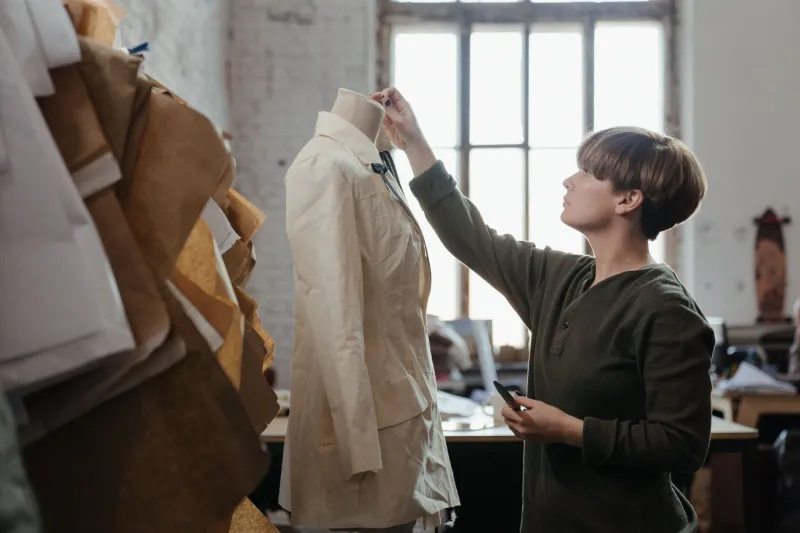
For decades, the fashion industry has borrowed freely from the natural world — lifting colors from coral reefs, silhouettes from bird-of-paradise plumes, and textures from tropical canopies. Yet the relationship has rarely been reciprocal. That is beginning to change, and orchids are leading the way.
Across some of the most biodiverse island destinations on the planet, a small but growing cohort of luxury designers is doing something genuinely unprecedented: traveling not simply for inspiration, but for accountability. They are arriving on orchid-rich islands with conservation scientists, master weavers, and indigenous botanists as their collaborators, and they are leaving with something far more nuanced than a mood board. They are leaving with a philosophy.
From Rainforest to Runway
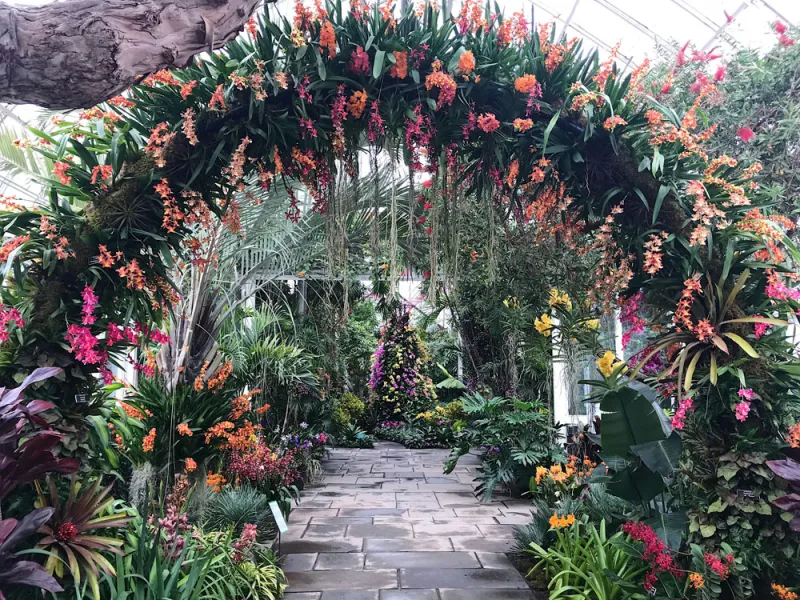
The process begins, almost always, with an encounter that resists easy description. Designers who have visited the orchid sanctuaries of Palawan in the Philippines or the misty botanical reserves of Borneo frequently speak of a kind of visual overwhelm — the sensation of witnessing color, form, and fragrance operating at a register that manufactured beauty simply cannot match.
New York-based designer Céleste Varro, whose spring collection drew heavily from the Vanda sanderiana — an orchid endemic to Mindanao and considered among the most architecturally complex blooms in the world — describes her first encounter with the species at a conservation nursery in Puerto Princesa as "a complete recalibration of what I understood elegance to mean." The bloom's deep magenta and amber gradients, its symmetrical yet asymmetrical geometry, and the way it seemed to hold light differently depending on the hour of day became the conceptual spine of an entire collection.
But Varro's collaboration did not stop at aesthetics. Working with a local cooperative of Palawan weavers who have long used natural dyes derived from orchid-adjacent plant species, she helped develop a line of silk garments whose color palette was extracted entirely from botanical sources native to the island ecosystem. A portion of proceeds from the collection funds the cooperative's participation in a regional orchid seed banking initiative.
Conservation Woven Into Every Thread
This model — luxury design as a funding mechanism for botanical preservation — is becoming more structured across the industry. In Hawaii, where native orchid species face mounting pressure from invasive plants and climate volatility, a collaborative program between the Oahu-based atelier Mauna Collective and the Harold L. Lyon Arboretum has produced two limited-edition textile collections in as many years. Each piece carries documentation linking it to a specific conservation parcel within the arboretum's native plant restoration program.
For American luxury consumers, who increasingly expect transparency from the brands they patronize, this level of traceability carries significant appeal. A garment that can be traced not merely to a country of origin but to a named species, a named ecosystem, and a named conservation outcome represents a new standard in what the industry calls "provenance storytelling."
The appeal is not purely ethical. There is also an unmistakable scarcity logic at work. When a designer creates a twelve-piece capsule collection inspired by an orchid that exists in fewer than three hundred wild specimens, the rarity of the bloom becomes inseparable from the rarity of the object. Luxury consumers understand this calculus intuitively.
Island Artisans as Creative Authorities
Perhaps the most significant shift in this emerging movement is the repositioning of island artisans — not as suppliers or subcontractors, but as primary creative voices. In Martinique, where the national flower is the Cattleya labiata and where a tradition of intricate botanical embroidery stretches back centuries, a multigenerational family of textile artists known as Atelier Fleur Créole has begun collaborating directly with American and European fashion houses on terms that grant them co-designer status and intellectual property rights.
Matriarch Josephine Célimène, whose grandmother first developed the family's signature technique of dimensional orchid embroidery using locally sourced silk thread, describes the shift in the industry's posture as meaningful but still incomplete. "For a long time, people came here to take the image and go home," she says. "Now they are beginning to understand that the image belongs to the place, and if you want it, you must honor the place."
Her daughter, Anaïs, who handles the atelier's international partnerships, notes that the most successful collaborations have been those in which designers spent extended time on the island — attending the annual orchid market in Fort-de-France, visiting the Jardin de Balata with a botanist guide, and participating in the embroidery process itself. "When a designer has touched the orchid and touched the thread and understood how one becomes the other," Anaïs explains, "the collection shows it. You can feel the difference."
Travel as the Essential First Step
What unites every story in this emerging movement is the irreplaceable role of physical presence. No digital archive of orchid photography, however comprehensive, has produced the same quality of creative response as a week spent in a living botanical sanctuary. The designers, artisans, and conservationists working at this intersection are unanimous on this point: the travel is not incidental to the work. It is the work.
For luxury travelers who are themselves botanical enthusiasts, this convergence opens a new category of experience. Several island destinations are now offering immersive residency programs that welcome not only designers but collectors, writers, and cultural figures who wish to engage deeply with endemic orchid ecosystems. These programs typically combine guided botanical fieldwork with access to local artisan studios, conservation research facilities, and the kind of unhurried, expert-led engagement with living landscapes that is simply unavailable in any other format.
A New Vocabulary for Luxury
The broader significance of this movement may lie less in the garments it produces than in the vocabulary it is introducing to the luxury sector. Words like "endemic," "seed banking," "pollinator corridor," and "ethnobotany" are appearing with increasing frequency in the editorial content of major fashion publications — not as scientific footnotes but as genuine design values.
In this sense, the orchid is doing what it has always done in the natural world: drawing attention, commanding care, and insisting on the complexity of the ecosystem that sustains it. That luxury fashion is finally learning to listen is, for those who love both beautiful objects and living landscapes, a development worth celebrating — and, wherever possible, worth traveling to witness firsthand.