Living Architecture: How the World's Most Visionary Resorts Are Building Their Identities Around Orchids
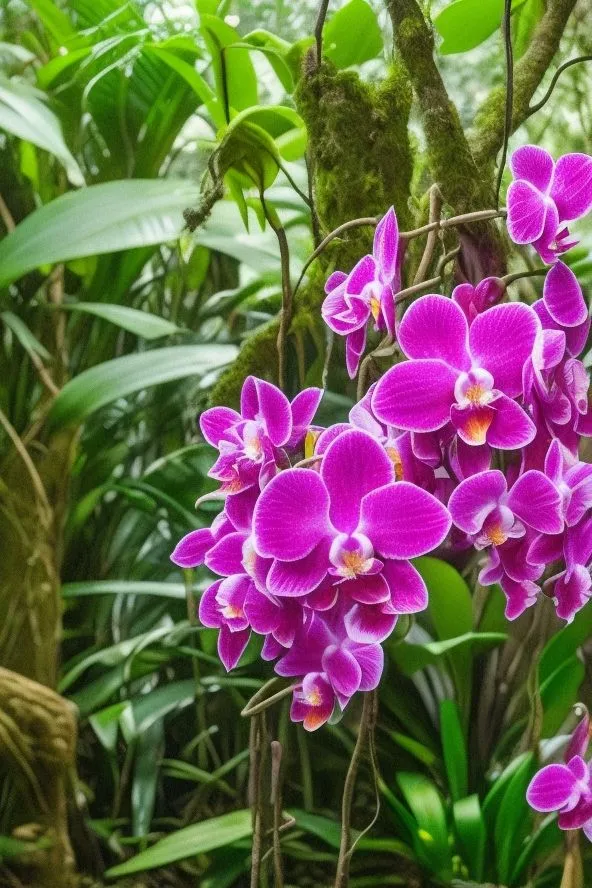
Photo: Basile Morin, CC BY-SA 4.0, via Wikimedia Commons
Across the world's most coveted tropical destinations, a quiet revolution is transforming the language of luxury hospitality — one bloom at a time. Forward-thinking resorts are no longer treating orchids as mere decorative accents; they are weaving living botanical narratives into the very architecture, programming, and philosophy of the guest experience. For the discerning American traveler, understanding this shift means unlocking a new dimension of immersive island travel.
From Centerpiece to Cornerstone
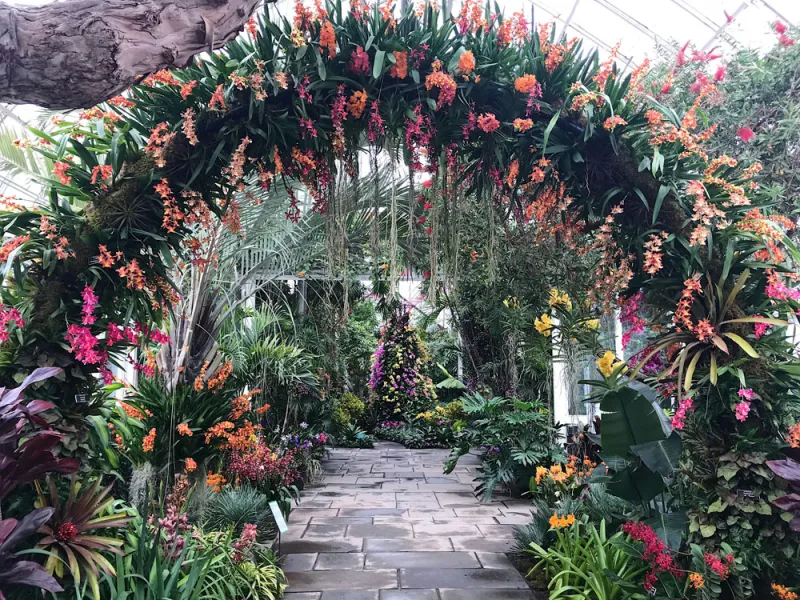
Not long ago, a single Phalaenopsis arrangement on a hotel reception desk represented the full extent of orchid hospitality. That era has decisively passed. Today, the most innovative properties in destinations such as Bali, Singapore, Tahiti, and the Hawaiian archipelago are commissioning living orchid walls that rise two stories high, designing open-air corridors where rare Vanda specimens trail overhead, and collaborating with ethnobotanists to ensure that every plant on display carries a story worth telling.
The distinction, as several resort designers are quick to emphasize, lies in intentionality. "There is a profound difference between placing flowers in a lobby and constructing an environment where the plant life is the architecture," explains one Bali-based resort design consultant who has overseen botanical integration projects across Southeast Asia. "When guests arrive and immediately sense that the orchids belong — that they are native, cultivated with purpose, and connected to the landscape beyond the property boundary — something shifts in their perception of the entire stay."
That perceptual shift, it turns out, has measurable consequences for guest satisfaction and brand loyalty.
The Psychology of the Living Room
Hospitality researchers have long studied the effects of biophilic design — the deliberate incorporation of natural elements into built environments — on human wellbeing. Orchids, with their extraordinary visual complexity and their associations with rarity and care, occupy a particularly potent position within this framework.
Guests who encounter living orchid installations in resort spaces report heightened feelings of calm, a stronger sense of place, and a perception that the property values authenticity over artifice. For American travelers accustomed to the polished sameness of urban luxury hotels, these responses carry additional weight. A resort in Moorea, French Polynesia, that greets arrivals with a hand-selected lei of locally cultivated orchids and then continues that botanical thread through every public space — the spa, the dining terraces, the overwater bungalow pathways — creates a coherent sensory identity that no amount of marble or thread-count can replicate.
This coherence, designers argue, is precisely the point. "Luxury travelers today are extraordinarily sophisticated," notes a hospitality consultant based in Honolulu who advises properties across the Pacific. "They can identify when a design decision is cosmetic versus when it reflects genuine curatorial thinking. Orchids, because they require knowledge, commitment, and ongoing care to thrive in a hospitality setting, communicate that a property has invested in something real."
Properties Leading the Botanical Charge
Several properties around the world merit particular attention for the depth and originality of their orchid integration.
In Singapore — a city-state that has elevated orchid cultivation to a matter of national identity — the Botanic Gardens precinct has inspired neighboring luxury hotels to develop dedicated orchid concierge programs. Guests can arrange private dawn walks through curated orchid collections with resident horticulturalists, attend intimate propagation demonstrations, and even commission a named hybrid orchid as a bespoke souvenir of their stay. The Singapore Botanic Gardens' orchid garden, home to over a thousand species and hybrids, remains one of the most compelling reasons for American botanical enthusiasts to route a Southeast Asia itinerary through this destination.
In Bali, several high-design villas in the Ubud highlands have partnered with local subak farming communities to source orchids directly from family-run cultivation operations. The arrangement benefits both parties: the properties gain access to an extraordinary variety of endemic and cultivated specimens, while the farming families receive stable income and international visibility. For guests, the result is an environment where every bloom carries a traceable provenance — a quality that resonates deeply with the values-driven American luxury traveler.
In Hawaii, a handful of boutique properties on the Big Island have begun collaborating with orchid growers in the Puna district — historically one of the most productive orchid-growing regions in the United States — to develop immersive farm-to-vase programming. Guests harvest blooms in the morning and encounter them again, artfully arranged, at their evening dinner table. The circularity of the experience transforms a simple floral detail into a narrative of place.
What to Look for as a Traveler
For American travelers seeking orchid-centric accommodations, a degree of informed scrutiny is worthwhile. Not every property that features orchids in its marketing materials has invested meaningfully in botanical authenticity. Several markers distinguish genuine commitment from surface-level styling.
First, consider provenance. Does the property source its orchids locally or regionally? Are the species endemic or at least appropriate to the destination's ecology? A resort in the Caribbean displaying imported Southeast Asian hybrids with no contextual connection to the island's flora is making an aesthetic choice, not a botanical one.
Second, look for programming depth. Properties that offer only passive encounters with orchids — beautiful as those encounters may be — provide a fundamentally different experience from those that invite guests into active engagement: guided walks, cultivation workshops, conversations with resident botanists, or partnerships with nearby gardens and research institutions.
Third, assess continuity of design. The most compelling orchid-centric properties maintain their botanical identity across every touchpoint of the guest journey, from the welcome amenity to the spa treatment menu to the culinary program. When orchid-infused teas, orchid-derived skincare formulations, and living floral installations all speak the same design language, the effect is genuinely immersive rather than incidental.
Finally, inquire about conservation commitments. The finest properties in this space contribute meaningfully to orchid preservation — whether through on-site propagation programs, financial support for regional botanical gardens, or partnerships with conservation organizations. For the American traveler who wishes to ensure that their luxury expenditure aligns with responsible values, this dimension of a property's orchid program is increasingly non-negotiable.
The Future of Botanical Hospitality
As climate considerations and a growing appetite for meaningful travel continue to reshape American attitudes toward luxury, the orchid's role in high-end hospitality seems certain to deepen rather than diminish. Properties that have invested in genuine botanical identity will find themselves well positioned to attract a traveler demographic that is simultaneously more discerning and more values-conscious than any previous generation.
The orchid, in this context, is not merely a flower. It is a declaration of intent — a signal that a property has chosen depth over spectacle, rootedness over novelty, and living beauty over its more convenient facsimile. For those who travel with their eyes fully open, that declaration is among the most compelling invitations a destination can extend.