The Guide Who Brought You Back: Why Luxury Travelers Are Returning to Tropical Islands for the People, Not Just the Petals
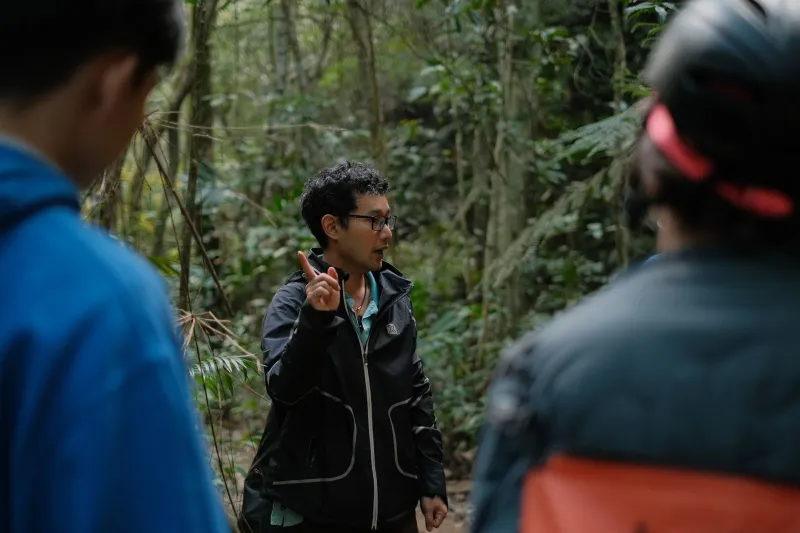
There is a particular kind of travel memory that does not fade with time. It is not the image of a luminous Vanda draping itself across a canopy walkway, nor the sensation of humid island air settling on the skin at dawn. It is, more often than not, the voice of someone standing beside you in that moment — explaining, with unhurried precision and unmistakable affection, exactly what you are witnessing and why it matters.
For a growing segment of America's most intentional luxury travelers, that voice belongs to a specific person. And increasingly, they are booking flights back to Borneo, back to the highlands of Papua New Guinea, back to the volcanic slopes of Hawaii or the forested interiors of Trinidad — not primarily for the orchids, but for the guide who first revealed them.
A New Measure of Travel Loyalty
The hospitality industry has long understood that exceptional service creates repeat guests. What is emerging now, however, operates at a different register entirely. Guests are not simply returning to a beloved resort; they are scheduling their travel calendars around the availability of a particular naturalist. They are emailing ahead months in advance to confirm that a certain specialist will be present during their stay. Some are even coordinating multi-destination itineraries across separate island nations to follow a guide whose expertise spans multiple ecosystems.
This phenomenon — which travel insiders have begun calling the "guide relationship model" — reflects a broader shift in how affluent Americans define value in experiential travel. Where luxury once signaled thread counts and Michelin stars, it now increasingly signals access: access to knowledge, to authenticity, and to the kind of unhurried human connection that a curated group tour simply cannot replicate.
Botanical guides, and orchid specialists in particular, occupy a singular position within this emerging dynamic. The complexity of orchid ecology — the intricate relationships between species and pollinators, between microclimate and morphology, between cultural tradition and conservation urgency — demands an interpreter. And when that interpreter is gifted, the experience is genuinely irreplaceable.
Profiles in Expertise: The Guides Who Define the Journey
On the island of Borneo, where the rainforest floor conceals hundreds of terrestrial orchid species invisible to the untrained eye, guides such as those working within the Danum Valley Conservation Area have cultivated reputations that extend far beyond their home region. American travelers who have worked with veteran naturalists in Sabah frequently describe a before-and-after quality to the experience — a sense that their relationship with the natural world was permanently recalibrated. Several report returning annually, treating the relationship as one might a long-standing mentorship.
In Hawaii, where the native Platanthera holochila represents one of the rarest orchid species on American soil, certain resort naturalists at properties along the Hamakua Coast have developed devoted followings among botanical enthusiasts from the mainland. What distinguishes these individuals is not merely their scientific literacy, but their capacity to translate that knowledge into narrative — to make a single flower feel like a chapter in a longer, more urgent story.
In Southeast Asia's orchid-rich island destinations, a handful of guides have effectively become the reason certain properties remain fully booked seasons in advance. Their institutional knowledge of bloom cycles, forest access routes, and the cultural histories embedded within local orchid traditions gives guests something no app or guidebook can replicate: a living relationship with place.
What Makes a Guide Indispensable
Speak with travelers who have experienced this phenomenon firsthand, and certain qualities emerge consistently. The most sought-after botanical guides share an ability to calibrate their communication to the individual — recognizing when a guest wishes to absorb scientific detail and when they simply want to stand in silence before something extraordinary. They possess what might be described as ecological fluency: an understanding not just of orchids in isolation, but of the entire web of relationships that sustains them.
Equally important is temperament. The best guides carry their knowledge lightly. They do not perform expertise; they share it. In the unhurried context of a private orchid walk, this distinction matters enormously. Guests who feel genuinely seen and intellectually engaged — rather than lectured to or managed — are the ones who return.
Resorts that have recognized this dynamic are beginning to invest accordingly. Forward-thinking properties in destinations such as Fiji, Sri Lanka, and Costa Rica are formalizing guide development programs, offering long-term contracts to their most exceptional naturalists and creating structures that allow guests to request specific individuals upon booking. Some have gone further, building signature experiences around a named guide's expertise — essentially creating a human-centered offering as distinctive as any physical amenity.
The Loyalty That No Points Program Can Replicate
For American travelers accustomed to measuring loyalty through airline miles and hotel reward tiers, the guide relationship model represents a genuinely different kind of allegiance. It is personal, intellectual, and in many cases, quietly transformative. Guests who return to a destination for a guide are not chasing comfort or status — they are chasing continued growth, a deepening of something that began on a forest trail or a misty hillside plateau.
This carries meaningful implications for how luxury travel brands communicate their offerings. The most compelling case for returning to an orchid destination is not, ultimately, a new suite category or an expanded spa menu. It is the knowledge that someone exceptional is waiting — someone who remembers which species captivated you last time, who has already identified a new site worth exploring, and who will meet you at the trailhead before the heat of the day arrives.
A Relationship Worth Cultivating
For travelers considering their next botanical journey, the practical takeaway is straightforward: invest time in finding the right guide before you arrive. Research the naturalists affiliated with your chosen resort or destination. Read their published work, if it exists. Ask properties directly whether specific guides are available for private engagements. If you have already encountered someone exceptional in the field, reach out to them directly — many of the most accomplished botanical specialists maintain their own correspondence with returning guests.
The orchids, magnificent as they are, will bloom whether or not you are present to witness them. The guide who knows exactly where to stand, when to arrive, and what to say in the moment of encounter — that is the rarer find. And once discovered, it is the kind of relationship that has a way of rewriting your entire approach to travel.