The Art of Arriving Empty: How Luxury Travelers Are Learning to Leave Orchid Destinations With Nothing but Memory
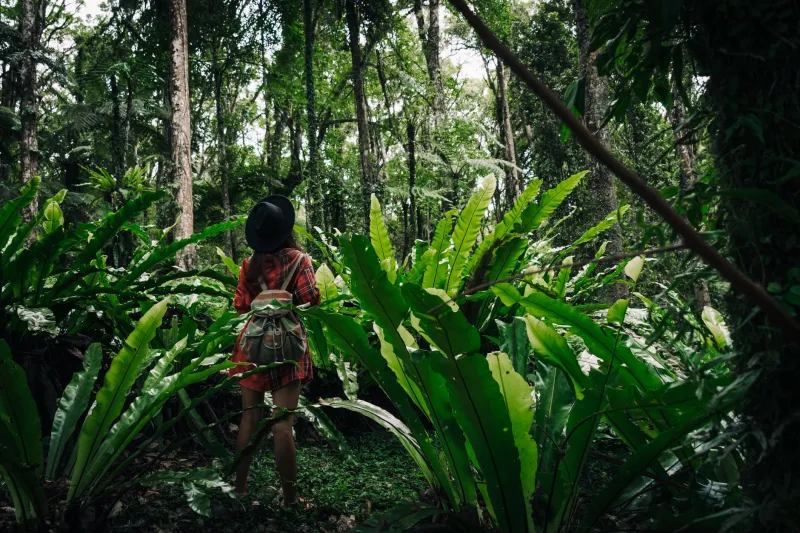
There is a particular kind of traveler who returns from Borneo, from the cloud forests of Ecuador, from the volcanic highlands of Hawaii, carrying no new specimens in climate-controlled cases, no memory cards packed with macro photographs, no pressed petals tucked between the pages of a journal. They return, as one seasoned orchid pilgrim described it, "deliberately unburdened." And increasingly, that is precisely the point.
Across the world's most storied orchid destinations, a quiet but meaningful shift is underway. The transactional instincts that have long defined botanical tourism — the urge to own, to document, to possess in some form the beauty one has witnessed — are giving way to something more intentional, and for many travelers, far more rewarding.
The Problem with the Perfect Shot
For years, the luxury botanical travel market was largely organized around acquisition. Whether the prize was a rare Paphiopedilum cutting legally sourced through a licensed nursery, or the definitive photograph of a Dracula orchid blooming in highland mist, the implicit goal was to extract something of value from the encounter and carry it home.
But a growing chorus of guides, resort designers, and travelers themselves are questioning that framework. "The camera becomes a wall," says one botanical guide who leads immersive orchid experiences on the island of Maui. "The moment you raise it, you've already left the room. You're no longer in the forest — you're curating it."
This observation resonates with a broader cultural conversation happening among American luxury travelers, many of whom are arriving at high-end wellness retreats and nature experiences with a new set of questions. Not what can I take from this place? but what can this place offer if I simply allow it to?
Orchid Meditation: A Practice Takes Root
Several forward-thinking resorts across Southeast Asia and the Caribbean have begun formalizing what practitioners are calling "orchid meditation" — structured experiences designed to cultivate presence rather than output. These are not passive garden strolls. They are guided, intentional encounters with rare blooms, often conducted in silence, with an emphasis on sensory absorption over documentation.
At one boutique property nestled in the hills above Chiang Mai, Thailand, guests are asked to surrender their phones before entering the resort's private orchid sanctuary. A resident botanist leads small groups — never more than six — through a curated landscape where dozens of native species grow in conditions that closely mirror their wild habitats. The guide speaks rarely. When she does, it is to draw attention to a particular fragrance carried on the morning air, or to the way light filters through a canopy to illuminate a single Rhynchostylis spike in bloom.
"We are not teaching people about orchids," she explains. "We are teaching people how to be near them."
Similar programs have emerged in Costa Rica, Bali, and the orchid-rich highlands of Colombia, each adapted to its specific ecological and cultural context, but unified by the same foundational philosophy: that the most profound botanical experience is one in which the traveler brings no agenda beyond open attention.
What Travelers Are Discovering
Those who have participated in these experiences describe their effects in terms that sound less like travel reviews and more like accounts of meditation retreats. A retired physician from Portland, Oregon, who traveled to Borneo specifically to engage with wild orchid habitats, described standing before a Bulbophyllum lobbii in full flower for nearly forty minutes without moving. "I've never done anything like that in my life," she said. "Not at the Louvre. Not at the Grand Canyon. Something about the scale of it — this tiny, perfect, completely indifferent thing — just stopped me."
Psychologists who study the restorative effects of nature on human cognition have a framework for what she experienced. Attention Restoration Theory, developed by researchers Rachel and Stephen Kaplan in the 1980s, suggests that natural environments rich in what they called "soft fascination" — elements that hold interest without demanding analytical effort — are uniquely capable of replenishing depleted mental resources. Orchids, with their extraordinary visual complexity and their quality of appearing simultaneously familiar and alien, may represent a particularly potent version of this stimulus.
What is notable, however, is that the restorative effect appears to be diminished when the encounter is mediated by a device. Multiple travelers interviewed for this article reported that their most memorable orchid experiences were ones in which they had, for one reason or another, set the camera aside. The memory, paradoxically, seems sharper for the absence of a photograph.
The Guide's Role in Facilitated Restraint
For botanical guides, facilitating this kind of experience requires a different skill set than conventional naturalist interpretation. The goal is not to fill silence with information, but to protect the conditions in which genuine attention can arise. Several guides describe this as one of the more challenging aspects of their work — particularly with American travelers, who often arrive with a strong cultural conditioning toward productivity and documentation.
"There's usually a moment, about twenty minutes in, where people get uncomfortable," says a guide who leads orchid immersion experiences in Puerto Rico's El Yunque rainforest region. "They want to do something. They want to take a picture, or ask a question, or check their phone. And if you can just hold that space — if you can just let them sit with that discomfort — something shifts. They come out the other side of it."
What they come out to, by most accounts, is a quality of attention that most urban Americans rarely access: unhurried, unmediated, and genuinely receptive.
Luxury Redefined at the Root
There is something almost paradoxical about the fact that this philosophy — rooted in restraint, in the deliberate refusal to acquire — has found its most enthusiastic audience among luxury travelers. Yet perhaps it is not so paradoxical after all. Those who have already accumulated the experiences, the photographs, the rare specimens, are often the first to recognize that accumulation has its limits.
The resorts and guides facilitating these experiences are, in their own way, offering something genuinely rare: the conditions for a kind of encounter that cannot be packaged, replicated, or taken home. In a market saturated with exclusive access and curated novelty, the experience of simply standing before a wild orchid in full bloom — with no camera raised, no acquisition planned, no story already written — may represent the truest form of luxury available.
To arrive with empty hands, and to leave the same way, having been changed by something that asked nothing of you in return: that, for a growing number of travelers, is the journey worth taking.