The New Botanists: Inside the Island Apprenticeships Shaping a Generation of Orchid Interpreters
There is a particular moment that veteran orchid guides describe with remarkable consistency. A traveler — often accomplished, often well-read, often someone who has visited a dozen tropical destinations before — stops mid-trail and says something to the effect of: I've seen photographs of this exact flower, but I had no idea it would make me feel this way. The guide smiles. That gap between image and emotion, between data and experience, is precisely the territory they have spent years learning to inhabit.
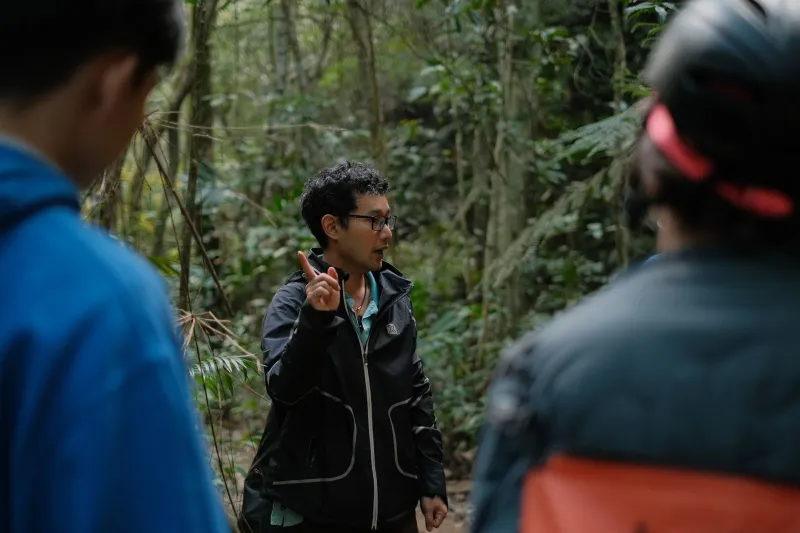
This is the domain of the orchid interpreter: a professional who has emerged quietly but unmistakably across tropical island destinations over the past decade, reshaping the way luxury travelers engage with botanical environments. Neither tour guide nor scientist, these specialists occupy a discipline that did not have a name until very recently — and the pathways that produce them are as varied and intricate as the flowers they champion.
From Field Notebooks to Felt Experience
The distinction between a conventional guide and an orchid interpreter is not merely one of vocabulary. Traditional botanical tours have long offered taxonomic instruction — Latin names, pollination mechanics, altitude preferences. What the new generation of specialists brings is something more layered: the capacity to translate scientific knowledge into narrative, and narrative into genuine emotional resonance.
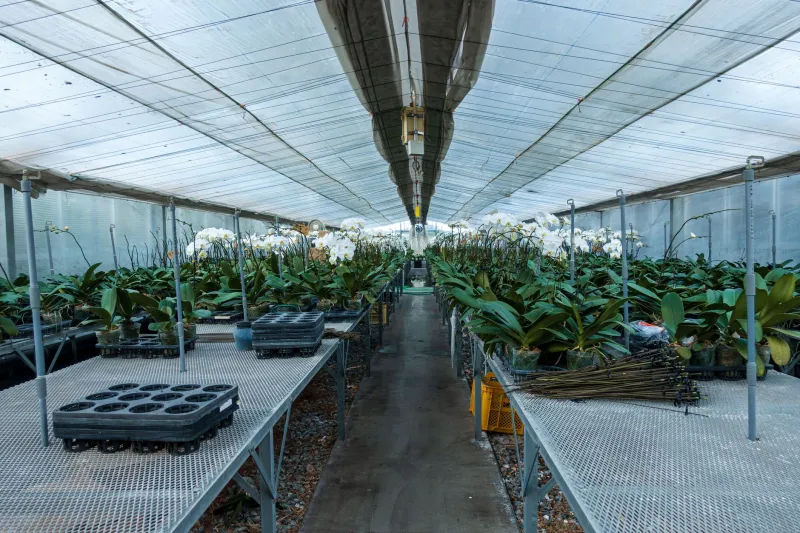
In Sabah, on the Malaysian island of Borneo, nurseries affiliated with conservation research stations have developed structured apprenticeship programs that run between eighteen months and three years. Trainees begin in the growing houses, learning propagation and root health before they are permitted to lead a single walk. The philosophy, as one program director has described it, is that credibility in front of a guest begins with credibility in front of the plant.
But horticultural competence is only half the curriculum. Increasingly, these programs incorporate what might be called interpretive intelligence: the ability to read a group of travelers, to sense when scientific detail will deepen wonder and when it will flatten it, and to find the personal or cultural thread that makes a rare epiphyte meaningful to someone from, say, suburban Chicago or coastal Maine. Some programs have begun partnering with storytelling coaches and even theater practitioners to develop this dimension of training.
The Mentorship Model and Its Island Variations
Not every island has the institutional infrastructure to support formal apprenticeship programs, and in many of the most botanically rich destinations, knowledge transfer remains deeply informal — and arguably more powerful for it.
In parts of the Caribbean, particularly in Jamaica and Trinidad, a tradition of elder-to-apprentice mentorship has long governed how plant knowledge moves between generations. What is changing now is that this traditional structure is being recognized, documented, and in some cases deliberately preserved by conservation-minded resort developers and ecotourism operators who understand its value to discerning travelers.
Several boutique properties in Belize have formalized arrangements with local plant elders, inviting them to co-lead experiences alongside younger staff members who serve as interpreters for guests unfamiliar with regional languages or cultural context. The result is a layered encounter that luxury travelers consistently describe as among the most authentic of their lives — not a performance of knowledge, but a witnessing of it in transmission.
In the Pacific, particularly across the volcanic island chains of Hawaii and the Philippines, university extension programs have begun offering certificate pathways in botanical interpretation, recognizing that the profession requires its own academic scaffolding. The University of Hawaii at Mānoa, for instance, has collaborated with local nursery operators to develop field practicum requirements that place students directly in guest-facing roles during their training.
What Luxury Travelers Are Actually Seeking
The rise of orchid interpreters is not happening in a vacuum. It reflects a broader and well-documented shift in the preferences of high-end travelers, particularly those in the forty-five-and-older demographic that drives much of the luxury botanical travel market in the United States.
Research conducted by several leading travel consultancies over the past five years has consistently found that experiential authenticity now outranks physical amenity as the primary driver of satisfaction among this group. A resort with a slightly smaller pool but a genuinely knowledgeable on-site botanist will earn more return visits and more enthusiastic word-of-mouth than one offering the reverse. The orchid interpreter, in this context, is not an amenity. They are the experience itself.
What guests describe wanting — and what skilled interpreters consistently deliver — is the sense of being genuinely taught by someone who genuinely cares. The emotional intelligence component of this profession cannot be overstated. The best practitioners possess an almost therapeutic attunement to their audience, knowing when to speak and when to allow silence, when to encourage a question and when to let the forest answer it.
Preserving Knowledge That Cannot Be Googled
There is an urgency beneath the beauty of this movement. Much of the localized, place-specific knowledge that orchid interpreters carry — the folklore, the medicinal traditions, the micro-ecological observations accumulated over lifetimes — exists nowhere in print. It lives in people, and those people are aging.
Several conservation organizations working across Southeast Asia and Central America have begun oral history projects specifically targeting elder plant specialists, recording their knowledge not merely as archival data but as raw material for the next generation of interpreters. The goal is not to freeze this knowledge in amber but to ensure it remains alive in practice, passed through relationship rather than reduced to a database entry.
For travelers who engage with orchid interpreters at their finest, this stakes-laden dimension of the work is often palpable. There is a quality of attention that comes from knowing you are learning something that might otherwise be lost — a quality that no app, no glossy field guide, and no AI-generated tour commentary can replicate.
The Profession Takes Shape
As demand grows and training pathways multiply, early signs of professional organization are beginning to emerge. Small networks of orchid interpreters across island regions are connecting through conservation conferences and ecotourism forums, sharing curriculum frameworks and advocating for fair compensation structures that reflect the genuine expertise their work demands.
For luxury travelers planning their next botanical journey, the presence of a trained orchid interpreter on a property's staff has become a meaningful signal — an indicator not just of horticultural seriousness but of a deeper commitment to the kind of encounter that stays with you long after the petals have faded.
The best of these specialists will tell you that their work is not really about orchids, or not only about orchids. It is about helping people see carefully, feel fully, and understand — perhaps for the first time — that the natural world has been trying to tell them something all along. Learning to hear it, it turns out, requires a teacher.