Roots and Revenue: How Tropical Island Communities Are Turning Orchid Conservation Into a Thriving Ecotourism Model
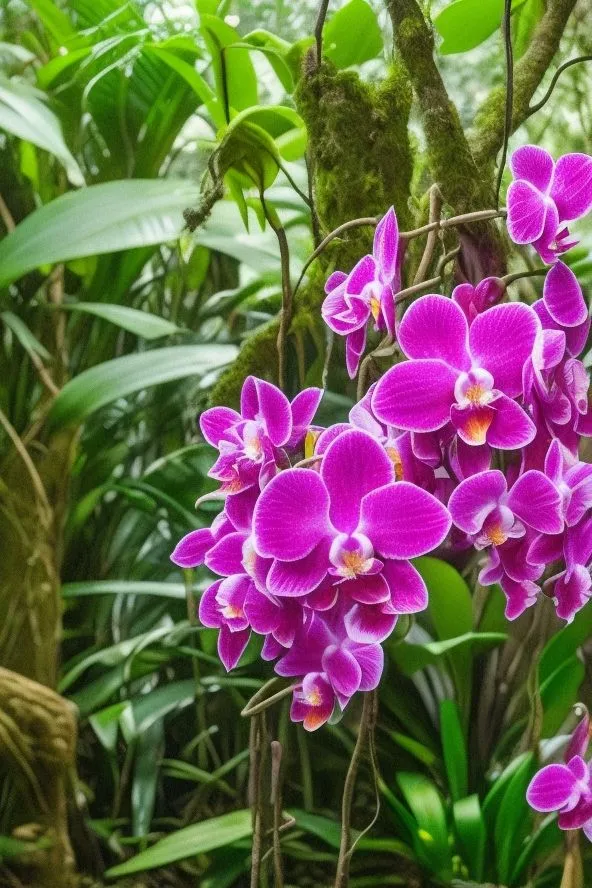
Photo: local guide leading ecotourism trek through tropical rainforest with orchids, via i.pinimg.com
Across the world's most biodiverse island destinations, a quiet revolution is taking root — one where the preservation of rare native orchids and the rise of luxury ecotourism are not competing interests but deeply intertwined ambitions. From the cloud forests of Borneo to the volcanic slopes of São Tomé, local communities are discovering that protecting their most delicate botanical treasures can generate lasting economic opportunity. For the discerning traveler, this means that every dollar spent in these destinations carries a consequence far greater than a memorable itinerary.
The Economics of Endemism
Orchids are, by botanical nature, deeply place-specific. Many species exist within ranges measured in square kilometers, thriving only where precise combinations of elevation, humidity, and symbiotic fungi converge. This ecological particularity, long a subject of scientific fascination, has become the foundation of an entirely new tourism economy — one built on the understanding that rarity, when properly stewarded, commands a premium.
In Sumatra, for instance, the Anggrek Foundation — a coalition of conservationists and village leaders operating in the Leuser Ecosystem — has partnered with a handful of boutique lodge operators to offer guided orchid treks through primary forest that would otherwise be inaccessible to outsiders. The program charges guests upward of $400 per guided excursion, with forty percent of proceeds flowing directly into a habitat restoration fund. Since the program's inception in 2019, the coalition reports that over 1,200 acres of orchid-bearing forest have been brought under formal protection — land that had previously faced pressure from palm oil expansion.
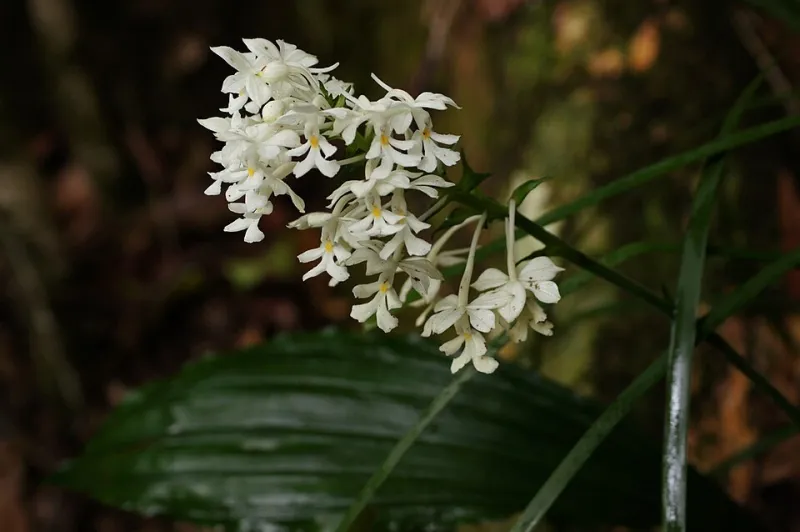
"The orchid became our argument," explains one of the foundation's senior field coordinators. "We could tell a government official that this tree produces timber worth a certain amount. Or we could show him what a single flowering specimen of Coelogyne speciosa is worth to a guest who has flown from New York specifically to photograph it. The math changed the conversation."
Luxury as a Conservation Tool
It may seem counterintuitive that high-end tourism — with its carbon footprint, infrastructure demands, and appetite for amenity — could serve as an instrument of environmental preservation. Yet the model emerging across several island destinations suggests that luxury and stewardship are not inherently at odds. The key lies in deliberate limitation.
On the island of Príncipe, a UNESCO Biosphere Reserve off the coast of West Africa, the Roça Sundy estate operates as a luxury retreat that explicitly caps its guest capacity to reduce habitat disturbance. The property's botanist-in-residence leads small-group orchid identification walks through secondary forest regenerating around former cocoa plantations, where over thirty native orchid species have been documented in recent years. The estate's conservation levy — a mandatory $75 per night added to each guest's bill — funds ongoing species mapping and the salary of two full-time local field researchers.
"We are not a hotel that happens to be near a forest," the estate's director of conservation has noted in public statements. "We are a conservation project that accommodates guests who share our values."
This framing — one that positions the traveler as participant rather than mere visitor — has proven resonant with the American luxury market, where environmental consciousness has become an increasingly important component of aspirational travel.
Indigenous Knowledge as Irreplaceable Infrastructure
Perhaps the most significant, and least discussed, dimension of orchid ecotourism is its dependence on indigenous ecological knowledge. In Papua New Guinea, where orchid diversity is among the highest on the planet, community-led tourism initiatives in the Highlands region have placed village elders and traditional landowners at the center of the guest experience. These guides possess generational knowledge of orchid habitats — knowledge that no field manual or satellite survey can replicate.
At one such program operating near the Sepik River basin, guests pay a premium specifically for access to this expertise. A multi-day botanical immersion led by local guides, including meals prepared from forest-adjacent gardens and accommodation in community-owned guesthouses, runs approximately $1,800 per person for three nights. The program is deliberately modest in its physical infrastructure, prioritizing authenticity over amenity in ways that have nonetheless attracted guests from across the United States and Europe.
"Our knowledge is our resource," one senior guide has explained through an interpreter. "The orchids grow because our ancestors knew how to live with them. We are not showing guests the forest. We are showing them the relationship."
For American travelers accustomed to curated luxury, this kind of encounter — raw, relational, and genuinely educational — has proven among the most memorable of any botanical journey.
The Certification Question
As orchid ecotourism grows, so too does the risk of greenwashing. Not every resort that markets itself as "conservation-minded" operates with genuine accountability. Industry observers recommend that travelers seek destinations affiliated with recognized certification bodies, including the Global Sustainable Tourism Council and, in the botanical space, programs endorsed by Botanic Gardens Conservation International.
Transparency in financial reporting — specifically, documentation of how conservation levies are allocated — is another meaningful signal. Reputable programs will readily provide guests with annual impact reports or direct them to partner organizations whose work can be independently verified.
For those planning a first foray into this style of travel, working with a specialist tour operator who has established relationships with vetted community programs remains the most reliable approach.
What Your Visit Actually Protects
The orchid tourism economy, at its most functional, creates a virtuous cycle: traveler spending funds habitat protection, which sustains the floral spectacle that draws future travelers. Communities with a financial stake in intact forest have demonstrated, across multiple case studies, a measurably greater resistance to extractive industry pressure.
For the American luxury traveler, the implications are clarifying. A well-chosen orchid-focused itinerary is not merely an aesthetic indulgence. It is, in a quantifiable sense, a conservation act — one conducted in some of the most breathtaking landscapes on earth, in the company of people whose relationship with these extraordinary flowers stretches back generations.
At Orchid Isle, we believe the most meaningful journeys are those that leave something behind. In the case of orchid ecotourism, what remains is the forest itself.