Petals and Power: The Quiet Geopolitics of Island Orchids on the World Stage
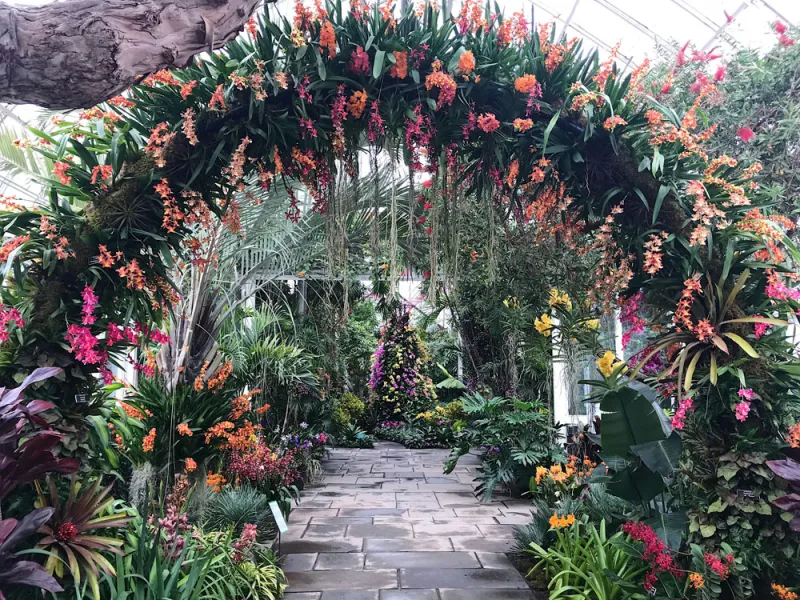
Photo: tropical orchid diplomatic ceremony botanical garden Singapore luxury, via girlintheyellowtaxinyc.com
When Singapore's government presented a newly hybridized orchid bearing the name of a visiting foreign dignitary, the gesture was neither incidental nor purely ceremonial. It was calculated. The island nation has named orchids after more than two hundred international figures — from Michelle Obama to Princess Diana — each bloom a carefully cultivated symbol of diplomatic goodwill. What appears to be a botanical courtesy is, in practice, one of the most elegant exercises in soft power the modern world has produced.
This is orchid diplomacy, and it is far more widespread, and far more consequential, than the average luxury traveler might suppose.
The Bloom as National Symbol
For many tropical island nations, endemic orchid species occupy a position of profound symbolic importance that extends well beyond horticultural pride. In Panama, the Holy Ghost Orchid — Peristeria elata — holds status as the national flower, appearing on official seals and serving as a centerpiece of cultural identity. Trinidad and Tobago claims the Chaconia, while the Philippines elevates Vanda sanderiana, known locally as Waling-Waling, to near-mythic status among its indigenous highland communities.
These designations are not arbitrary. Island governments have recognized that endemic species — plants that exist nowhere else on earth — represent a form of natural sovereignty. They cannot be manufactured, replicated, or imported. Their very rarity confers a kind of irreplaceable national character, one that diplomatic missions, tourism boards, and conservation agencies have learned to deploy with increasing sophistication.
For the luxury traveler arriving at a botanical garden in Bali or a highland reserve in Borneo, the encounter with a nationally designated orchid species is therefore never simply an aesthetic experience. It is an encounter with a carefully curated expression of national identity.
High-Stakes Botanical Exchanges
Behind the elegance of orchid diplomacy lies a complex architecture of legal agreements, intellectual property negotiations, and conservation treaties. The Convention on Biological Diversity and its Nagoya Protocol have fundamentally altered the way island nations manage access to their genetic resources — orchids prominently included.
Under these frameworks, governments retain sovereign rights over their endemic species. Botanical gardens, research institutions, and private collectors seeking specimens must now navigate formal access and benefit-sharing agreements. For wealthy American collectors accustomed to acquiring rare plants through auction houses or specialty nurseries, this shift represents a significant recalibration of how orchid ownership is understood.
Several island governments have moved decisively in this space. Madagascar, home to roughly one thousand native orchid species, has established regulatory bodies specifically tasked with managing international botanical access. Indonesia has pursued similar frameworks, recognizing that its extraordinary orchid biodiversity — estimated at more than five thousand species — constitutes a national asset of considerable economic value.
The implications for luxury travel are direct. Exclusive botanical tours that offer access to protected reserves, guided by government-affiliated naturalists, now function as a sanctioned channel through which international visitors can experience these species without triggering the legal and ethical complications that plague private acquisition.
The Collector Economy and Conservation Funding
Perhaps the most counterintuitive dimension of orchid diplomacy is the role that high-net-worth travelers and collectors inadvertently play in funding the very conservation programs that protect the species they covet.
Across Southeast Asia and the Caribbean, governments and NGOs have developed tiered ecotourism models in which premium access — guided night walks through restricted forest reserves, private greenhouse tours with lead horticulturalists, invitation-only propagation workshops — commands prices that directly subsidize conservation operations. A single exclusive botanical experience in the Ecuadorian cloud forest, for instance, may generate revenue equivalent to months of field research funding.
This dynamic has not gone unnoticed by island governments negotiating their positions within international conservation bodies. By framing luxury botanical tourism as a conservation mechanism, they strengthen their case for maintaining sovereign control over endemic species while simultaneously generating the economic justification for expanded habitat protection.
For American travelers, this presents a genuinely compelling proposition. Choosing a curated orchid expedition with a reputable operator — one that maintains transparent benefit-sharing arrangements with local communities and government partners — transforms a personal passion into a measurable act of environmental stewardship.
Naming Rights and Diplomatic Currency
Singapore's orchid-naming program deserves particular attention as a case study in botanical soft power. The Orchid Naming Programme, administered through the National Parks Board and hosted at the Singapore Botanic Gardens — a UNESCO World Heritage Site — has elevated the practice of dedicating hybrid orchids to visiting dignitaries into a formalized diplomatic ritual.
The process is meticulous. Hybridizers develop new cultivars specifically for presentation, considering color, form, and longevity. The named orchid is then cultivated and displayed within the Botanic Gardens' VIP Orchid Garden, where visitors can observe decades of diplomatic history rendered in petals. For the discerning traveler, a visit to this garden is simultaneously a horticultural and a geopolitical experience — a living archive of international relationships expressed through bloom.
Other island nations have observed Singapore's model with considerable interest. Jamaica, Hawaii (as a US state with its own distinct botanical identity), and several Pacific island territories have explored variations on the concept, recognizing that the international media attention generated by a high-profile orchid dedication far exceeds its modest material cost.
What This Means for the Informed Traveler
Understanding orchid diplomacy enriches the experience of botanical travel in ways that purely aesthetic appreciation cannot. When you stand before a nationally protected orchid species in its native habitat — whether in the highland forests of the Philippines, the limestone karsts of Vietnam, or the cloud forests of Costa Rica — you are witnessing something that your government, and the host nation's government, has collectively agreed to protect, regulate, and in some cases, negotiate over at the highest diplomatic levels.
The luxury traveler who chooses destinations and operators aligned with these conservation frameworks participates, however modestly, in a system of botanical stewardship with genuine geopolitical weight. The bloom before you is not merely beautiful. It is sovereign, symbolic, and — in the hands of island nations that have learned to wield it skillfully — quietly powerful.
At Orchid Isle, we believe that the most meaningful travel is travel undertaken with full knowledge of the worlds you are entering. The world of orchid diplomacy is one of the most fascinating — and least discussed — dimensions of tropical island culture. It rewards curiosity, demands respect, and offers the rare satisfaction of knowing that your journey contributes to something far larger than the journey itself.