Beyond the Visual: How Luxury Island Resorts Are Teaching Guests to Experience Orchids with Every Sense
For most travelers, encountering an orchid in the wild — or even in a carefully curated resort garden — begins and ends with the eyes. The symmetry of the petals, the improbable architecture of the bloom, the almost theatrical quality of color: these are the details that fill Instagram feeds and populate memory. But at a growing number of luxury island destinations, a quiet revolution is underway. Resort programming directors, botanical guides, and wellness practitioners are collaborating to offer something far more layered than visual appreciation. They are teaching guests, quite literally, how to experience an orchid.
This emerging discipline has earned an unlikely but apt comparison to the world of fine wine. The term "orchid sommelier" — still informal, still finding its footing — has begun circulating among hospitality professionals in destinations ranging from the Hawaiian Islands to the volcanic highlands of Bali and the rainforest lodges of Costa Rica. The analogy is deliberate. Just as a skilled sommelier guides a diner through the aromatic complexity, textural nuance, and regional character of a glass of wine, these botanical specialists are training guests to move through a garden with all five senses fully engaged.
The Fragrance Dimension
Scent is, perhaps, the most underestimated quality of the orchid family. While the popular imagination tends to associate orchids with visual drama rather than perfume, the reality is considerably more complex. Among the roughly 28,000 documented orchid species, fragrance profiles range from the warm vanilla of Vanilla planifolia — itself a tropical island native — to the sharp citrus notes of certain Zygopetalum varieties and the honeyed warmth of select Maxillaria species.
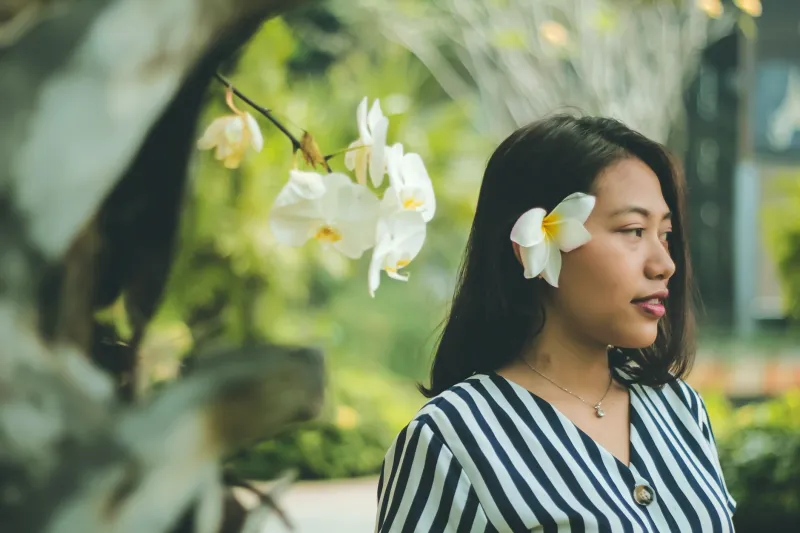
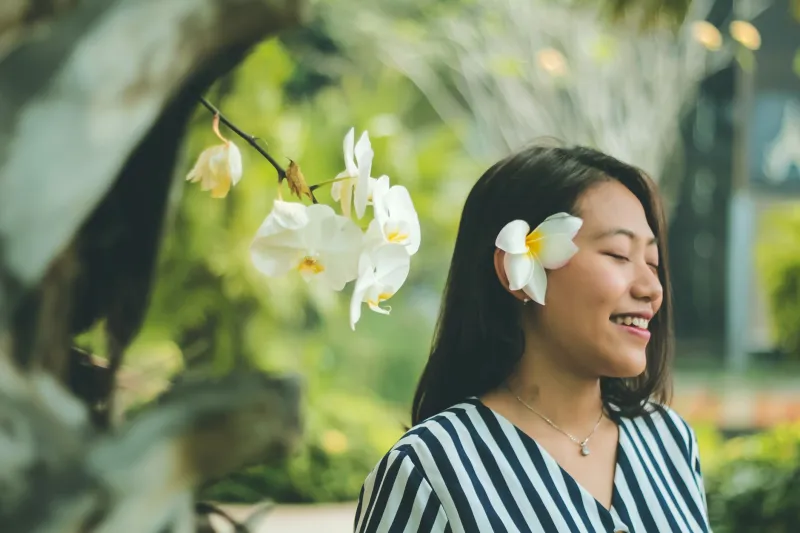
Several resorts in the Caribbean and Southeast Asia have begun formalizing what they call "orchid fragrance tastings" — guided sessions in which guests move through a curated sequence of blooming specimens, pausing at each to isolate and identify scent notes in the manner of a perfumery exercise. At some properties, these sessions are conducted in the early morning hours, when volatile aromatic compounds are most concentrated and the humidity of the island air acts as a natural diffuser. Guests are encouraged to close their eyes, breathe deliberately, and articulate what they detect — an exercise that, according to practitioners, sharpens sensory awareness well beyond the garden itself.
Touch, Texture, and the Tactile Garden
For American travelers accustomed to the "look but don't touch" protocols of botanical gardens and conservatories, the tactile orchid walk represents a genuine departure. At select island properties where orchids are cultivated specifically for guest engagement — rather than preservation alone — guided naturalists invite participants to run fingertips along the ribbed surface of a pseudobulb, to feel the waxy resistance of a mature Phalaenopsis petal, or to cup the velvety texture of a Paphiopedilum pouch.
This is not casual handling. These experiences are structured with care and ecological responsibility, taking place only in cultivated garden environments where physical engagement has been deemed sustainable. The intention, as one botanical guide at a Maui resort described it, is to "break the glass" — to move the orchid from the realm of the observed object into something closer to a living encounter. Guests frequently report that touching an orchid, even briefly and under guidance, transforms their relationship to the plant in ways that hours of visual study do not.
Meditative Immersion Among the Blooms
Perhaps the most distinctive — and, for some, the most unexpected — element of the multisensory orchid movement is its intersection with wellness practice. A number of island resorts have begun integrating guided meditation and breathwork sessions directly into their orchid gardens, positioning the blooming environment as a setting for deep sensory reset rather than passive admiration.
The approach draws on a body of research suggesting that immersion in complex natural environments — what Japanese practitioners call shinrin-yoku, or forest bathing — produces measurable reductions in cortisol levels and improvements in attentional focus. Orchid gardens, with their layered visual stimuli, ambient fragrance, and the soft acoustic texture of tropical birdlife and water features, are proving to be particularly effective environments for this kind of practice.
At several properties in Bali and the Philippines, these sessions are led by guides who move guests through breathing exercises calibrated to the rhythm of the garden itself — slow, deliberate inhalations designed to draw in the full olfactory complexity of the surrounding blooms. Participants are encouraged to notice not just scent and sight, but the quality of the air against the skin, the subtle variations in temperature between sun-drenched clearings and shaded orchid corridors, the faint sound of petals moving in a coastal breeze.
Why This Matters to the Luxury Traveler
The appeal of multisensory orchid programming to the American luxury market is not difficult to understand. Today's high-end traveler has, by and large, moved beyond the collection of destinations and toward the collection of experiences — and more specifically, toward experiences that cannot be replicated at home or approximated through a screen. A fragrance tasting conducted among living orchids on a volcanic island at dawn is, by definition, singular. It belongs to a place, a climate, and a moment that no resort amenity catalog can manufacture in advance.
There is also a deepening appetite, particularly among travelers in the forty-five-and-over demographic that constitutes a significant portion of the luxury botanical tourism market, for experiences that engage the intellect as well as the senses. The orchid sommelier model satisfies both: it is rigorous enough to feel educational, sensory enough to feel indulgent, and intimate enough to feel genuinely personal.
The Practitioners Behind the Experience
Building these programs requires a specific and still-rare combination of expertise. The most effective orchid sensory guides tend to be individuals who bridge the worlds of horticulture, hospitality, and wellness — professionals who can speak fluently about the botanical science of a Cattleya bloom while simultaneously guiding a guest through a breathing exercise designed to heighten olfactory receptivity.
Some island resorts are cultivating this talent in-house, partnering with local botanical institutions to develop training curricula for their naturalist staff. Others are bringing in outside specialists — perfumers, ethnobotanists, and meditation practitioners — on a seasonal or residency basis. The field is young, and its professional vocabulary is still being established. But the demand, by most accounts within the luxury hospitality sector, is growing steadily.
A New Standard for Botanical Tourism
The multisensory orchid experience is, at its core, an argument about attention. In a travel landscape saturated with visual content and curated imagery, it proposes something quietly radical: that the truest encounter with a rare tropical bloom requires the full engagement of the human body, not merely the camera lens.
For travelers willing to slow down, to follow a guide's instruction to close their eyes and simply breathe, to press a fingertip gently against the surface of a living petal — the reward is a form of botanical knowledge that no photograph can convey. It is the kind of knowledge that stays with a person long after the return flight home, lodged not in the camera roll but somewhere considerably more permanent.