Same Ocean, Different World: How Tropical Microclimates Shape the Orchids You Encounter Across Island Destinations
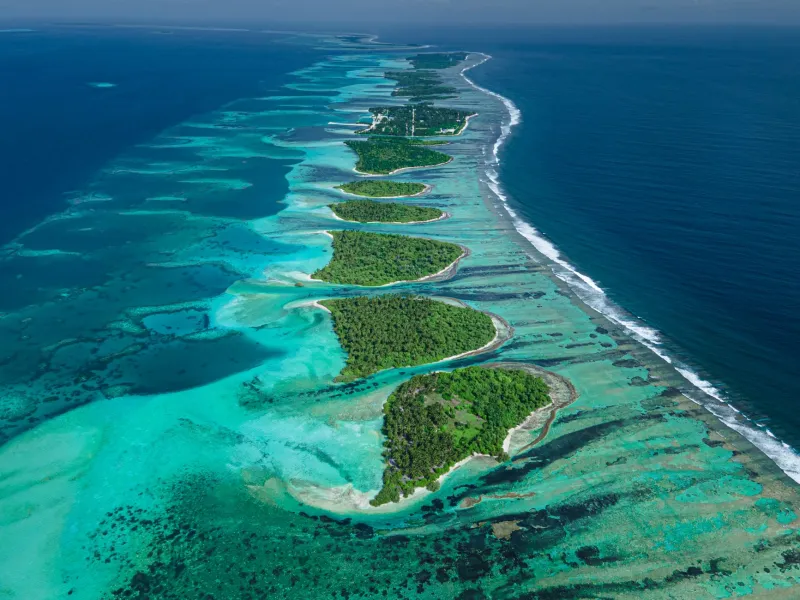
Stand on the windward shore of one island and you may find yourself surrounded by clouds of Epidendrum species cloaking every mossy branch in lavender and cream. Cross thirty miles of open water to a neighboring island, and the landscape shifts so completely that the orchids clinging to the same genus of tree appear almost unrecognizable — deeper in pigment, smaller in stature, blooming two full months later. This is the microclimate effect, and for those who travel with botanical curiosity, it is among the most compelling phenomena the tropical world has to offer.
Understanding why this happens — and how to plan a journey that takes full advantage of it — begins with a closer look at the invisible forces that govern orchid life.
The Atmosphere as Architect
Orchids are, above all else, creatures of atmospheric precision. Unlike many flowering plants that tolerate a wide range of conditions, the majority of epiphytic orchid species have evolved over millennia to respond to extraordinarily narrow environmental cues. A shift of five percent in relative humidity, sustained over several weeks, can delay or accelerate a blooming cycle. A slight change in the prevailing wind direction during the dry season can determine whether a plant produces one flower spike or three.
Tropical island chains amplify these sensitivities in ways that mainland environments rarely replicate. Each island within an archipelago functions as its own atmospheric laboratory. The angle at which trade winds strike a volcanic peak, the elevation at which cloud forests begin to form, the mineral content leached from lava fields into the soil below — all of these variables combine to produce what climatologists call a microclimate mosaic. For orchids, that mosaic is everything.
In the Caribbean, for instance, the difference between the leeward and windward faces of a single island can be as dramatic as the difference between two entirely separate countries. The windward side, perpetually bathed in moisture-laden Atlantic air, tends to support dense populations of shade-tolerant species that thrive in near-constant humidity. The leeward side, drier and more sun-exposed, favors drought-adapted varieties that produce their most spectacular blooms precisely because they are accustomed to stress. A traveler who visits only one side of such an island — as most resort-bound visitors do — sees, in effect, only half of the story.
Trade Winds and Timing
The trade winds that define life across the Caribbean and the Pacific island chains are not uniform in their behavior. Their strength, direction, and moisture content shift seasonally, and these shifts are directly encoded into the blooming calendars of the orchids they influence. Islands positioned slightly further north or south within the same chain may experience the peak of trade wind activity at different points in the year, creating a natural staggering of bloom seasons that, for the well-informed traveler, represents an extraordinary opportunity.
In practical terms, this means that a journey planned across three or four islands within the same region — rather than an extended stay at a single destination — can yield an almost continuous succession of peak blooming events. Botanists and experienced orchid guides often refer to this as "chasing the bloom front," a practice that requires knowledge of each island's specific microclimate calendar but rewards patience with a depth of floral experience that no single location could provide.
Luxury tour operators specializing in botanical travel have begun to recognize this potential, crafting itineraries that move guests between islands at precisely calibrated intervals. Rather than following a fixed schedule, these journeys are designed to flex in response to real-time atmospheric data, ensuring that arrivals align with the brief, brilliant windows when orchid populations reach their visual peak.
Soil, Volcanic History, and Root Chemistry
Above-ground atmospheric conditions tell only part of the story. Beneath the surface, the geological history of each island exerts a profound influence on orchid populations in ways that are less immediately visible but no less significant.
Volcanically young islands — those that emerged from the ocean floor within the last few hundred thousand years — tend to support soils rich in iron, magnesium, and other trace minerals that favor specific mycorrhizal fungi. These fungi form the underground partnerships that orchid roots depend upon for nutrient absorption, and their composition varies considerably from island to island. An orchid species that appears genetically identical across two neighboring islands may, in fact, be adapting to entirely different fungal communities, producing subtle but measurable differences in flower size, color saturation, and bloom duration.
Older islands, by contrast, have had more time for their soils to weather and differentiate. Their orchid populations often reflect this complexity through greater species diversity, as centuries of ecological succession have created a wider range of microhabitats within which different varieties have found their niches. For the traveling botanist, older island landscapes tend to reward slower, more deliberate exploration — the kind of unhurried attention that a well-designed luxury botanical itinerary is uniquely positioned to provide.
Rainfall Patterns and the Drama of the Dry Season
Perhaps the most counterintuitive lesson that tropical microclimatology offers orchid enthusiasts is this: abundance does not always produce the most spectacular blooms. Many orchid species have evolved to use the stress of a pronounced dry season as the trigger for their most dramatic flowering events. The brief deprivation of moisture, followed by the arrival of seasonal rains, sends a chemical signal through the plant that initiates the production of flower spikes with a kind of urgent, concentrated energy.
Across a chain of islands, rainfall patterns are rarely synchronized. One island may experience its dry season a full six weeks before its neighbor, meaning that the dramatic post-drought blooming events that follow are similarly staggered. For travelers who understand this dynamic, the dry season — often overlooked in favor of the lush green abundance of wetter months — becomes one of the most rewarding periods to plan a multi-island botanical journey.
Several of the Hawaiian islands offer a compelling illustration of this principle. The rain shadow created by Mauna Kea on the Big Island produces a dry western coast that stands in stark contrast to the perpetually misted eastern slopes, and the orchid populations on each side reflect that contrast completely. Moving between the islands of Maui, Kauai, and Oahu within a single trip reveals a similarly varied picture, with each island's unique topography and rainfall distribution producing a distinct botanical character.
Planning with Purpose
For the luxury traveler approaching a tropical island journey with botanical intention, the microclimate effect suggests a fundamentally different approach to itinerary design. Rather than selecting a single destination and settling in, the most rewarding experiences emerge from movement — deliberate, informed, and timed to the rhythms of each island's atmospheric personality.
Engaging a knowledgeable botanical guide who understands the regional microclimate calendar is perhaps the single most valuable investment such a traveler can make. These specialists track bloom conditions across multiple islands simultaneously, often maintaining relationships with local conservation researchers and resort naturalists who provide real-time field reports. Their knowledge transforms what might otherwise be a beautiful but somewhat passive resort experience into an active, intellectually engaged encounter with one of the natural world's most intricate systems.
The islands themselves, in this light, are not merely beautiful backdrops. They are distinct botanical worlds, each shaped by its own invisible architecture of wind and water and ancient stone. To move between them with awareness is to understand, at a depth that no photograph or field guide can fully convey, why the orchid endures as the most captivating flower on earth.