Guardians of the Understory: The Island Scientists Devoting Their Lives to Earth's Most Elusive Orchids
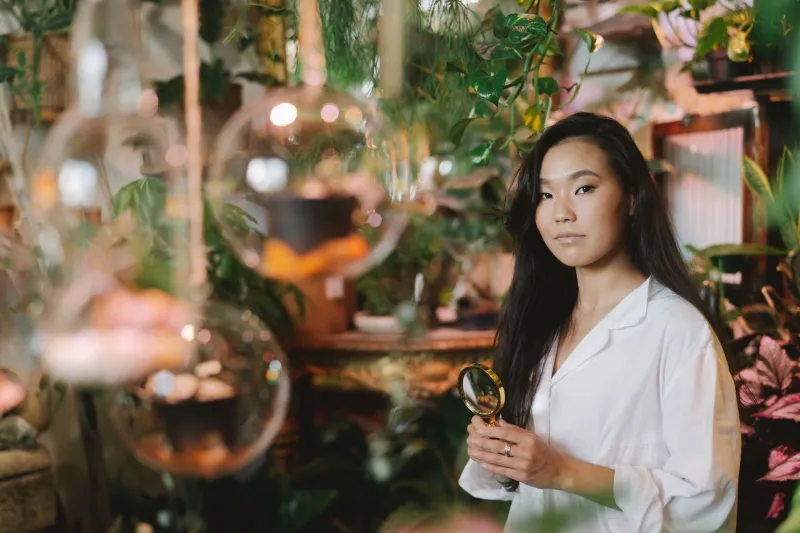
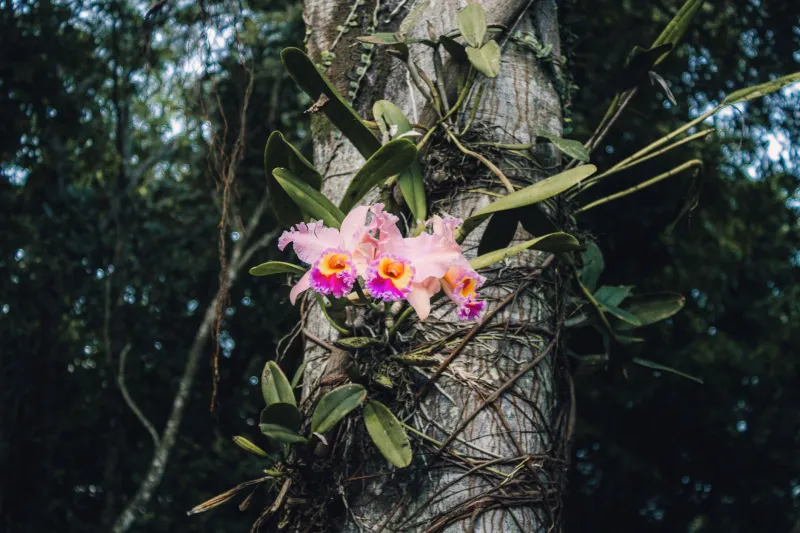
There is a particular kind of silence that settles over a cloud forest at dawn — not the absence of sound, but the presence of something older and more patient than noise. It is in these liminal hours that Dr. Marisol Vega, a field botanist based for much of the year on the island of Mindanao in the southern Philippines, does her most important work. She moves carefully through the wet undergrowth, her headlamp cutting a narrow beam through the mist, scanning the bark of ancient trees for a flower no larger than a thumbnail. The species she seeks — a critically endangered Bulbophyllum variant documented by fewer than a dozen researchers worldwide — may bloom for as little as three days each year.
"You learn very quickly that the orchid sets the schedule, not you," Vega says with a quiet laugh. "I have spent eleven days in the field waiting for a single bloom. And when it finally opens, it is worth every hour."
Vega is one of a loosely connected global network of scientists — botanists, ecologists, mycologists, and conservation geneticists — who have devoted their professional lives to understanding and protecting the world's rarest orchid species. Their laboratories are often remote islands. Their offices are canopied by the forest itself. And their findings, though frequently groundbreaking, rarely reach beyond the pages of academic journals.
For the luxury traveler who has already wandered the manicured gardens of Bali, strolled the botanical paths of St. Lucia, or attended an orchid festival in Singapore, these researchers represent an entirely different order of engagement — one defined not by passive admiration, but by genuine intellectual and ecological partnership.
A Science Hidden in Plain Sight
Orchids constitute the largest family of flowering plants on Earth, with estimates ranging from 25,000 to 30,000 known species — and scientists suspect that thousands more remain undescribed, particularly across the island archipelagos of Southeast Asia, the Pacific, and the Caribbean. What makes island orchids especially significant is their extraordinary degree of endemism: species that have evolved in geographic isolation over millions of years, developing relationships with specific pollinators, soil fungi, and microclimates that exist nowhere else on the planet.
Dr. James Okafor, a conservation geneticist affiliated with a university research program in Hawaii, has spent the past decade mapping the fungal networks — known as mycorrhizal associations — that allow native Hawaiian orchids to germinate and thrive. Without these underground fungal partners, he explains, the seeds of most orchid species are biologically incapable of developing into mature plants.
"When people think about saving an orchid, they think about the flower," Okafor says. "But you cannot save the orchid without saving the forest floor, the soil composition, the specific fungal communities. Conservation is never about a single organism. It is always about a system."
This systems-level thinking has begun to reshape how conservation organizations approach island ecosystems — and it has opened new avenues for scientifically literate travelers to participate meaningfully in the work.
The Research Methods Redefining What We Know
The tools available to today's orchid scientists would have seemed remarkable to the naturalists of the nineteenth century who first catalogued these species during colonial-era expeditions. Environmental DNA sampling — the process of extracting and analyzing genetic material from soil, water, or air — now allows researchers to detect the presence of rare orchid species without ever physically locating the plant. Drone-mounted multispectral cameras can survey forest canopies at resolutions fine enough to identify individual epiphytic orchids clinging to branches sixty feet above the ground.
On the island of Borneo, botanist Dr. Lena Hartmann leads a team that has pioneered the use of acoustic monitoring to track the activity of orchid pollinators — native bees, moths, and several species of gnat whose flight patterns correspond closely to bloom cycles. By understanding when and where pollinators move through the forest, her team can predict flowering events weeks in advance, dramatically increasing the efficiency of field surveys.
"We are essentially listening to the forest to understand the orchid," Hartmann explains. "Every organism in that ecosystem is communicating, and the orchid is always part of that conversation."
For travelers who engage with these researchers directly — whether through guided field excursions, research station visits, or citizen science programs — the experience offers something that no curated garden tour can replicate: the sensation of standing at the actual frontier of human knowledge.
How Travelers Can Support the Work
The financial realities of field science on remote tropical islands are unsparing. Grant cycles are unpredictable, equipment is expensive, and logistical challenges — including the cost of reaching and operating within protected forest zones — can consume a disproportionate share of limited research budgets. For this reason, several research stations and conservation organizations have developed structured programs that allow visitors to contribute directly, both financially and practically.
The Orchid Conservation Alliance, which supports field programs across seven island nations, offers what it describes as "scientific fellowship visits" — multi-day immersive experiences in which small groups of participants accompany researchers into the field, assist with data collection, and attend evening seminars on current findings. These are not adventure tourism packages designed for general audiences; they are intellectually demanding engagements calibrated for individuals with a serious interest in natural history.
Similarly, several luxury eco-lodges in Costa Rica, Madagascar, and the Azores have established formal partnerships with affiliated university research programs, directing a portion of guest revenue toward orchid conservation initiatives and hosting resident scientists whose work guests may observe and, in some cases, assist.
"The travelers who come through our program are not passive," says Dr. Vega. "They ask precise questions. They want to understand the methodology. And when they leave, they often become long-term supporters of the work — some of them for years afterward."
The Quiet Urgency Beneath the Beauty
It would be a disservice to romanticize the circumstances under which these scientists operate. Habitat loss, climate-driven shifts in precipitation patterns, invasive species, and — in certain island contexts — the illegal collection trade all represent active and accelerating threats to the orchid populations these researchers study. Several of the species currently under investigation are estimated to have global populations numbering in the dozens, not the thousands.
What sustains the scientists, many of them say, is not optimism in any conventional sense, but rather an almost philosophical commitment to documentation — to ensuring that even species that cannot be saved are at least fully known before they are lost.
"Every species we describe, every genome we sequence, every pollinator relationship we map — that knowledge belongs to the future," says Dr. Okafor. "We do not always know how it will be used. But the alternative is to let these organisms vanish without record, and that is simply not acceptable."
For the traveler who arrives on a tropical island seeking more than a beautiful view, this is the invitation: not merely to witness the orchid in bloom, but to stand alongside the people who have given their careers to understanding it. In doing so, one becomes part of a lineage of inquiry that stretches back to the great naturalists of the past — and forward, with any luck, into a future still rich with undiscovered blooms.