Rooted in Place: The Extraordinary Science Behind Why Island Orchids Cannot Be Replicated — And Why You Must See Them Yourself
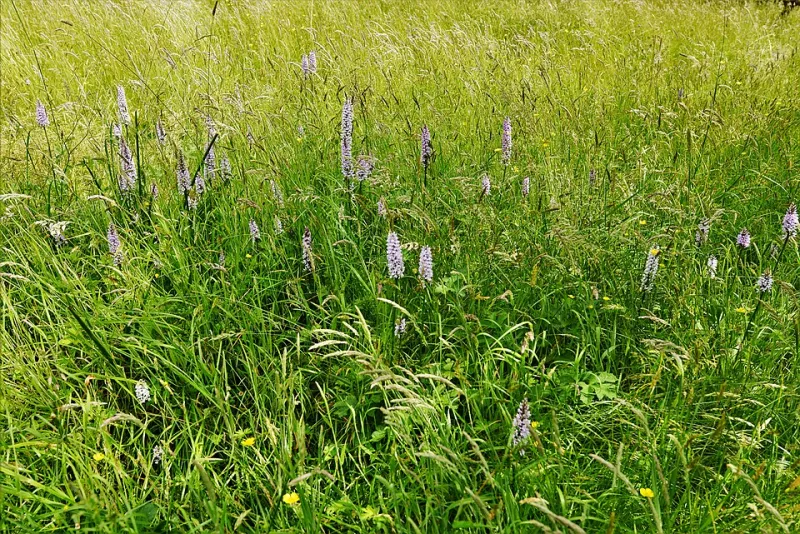
Photo: Michael Garlick, CC BY-SA 2.0, via Wikimedia Commons
There is a particular humility that settles over even the most accomplished orchid grower when they encounter a wild specimen thriving in its native habitat. The plant that required months of careful climate management in a specialized home greenhouse is, in the forest, utterly effortless — flowering abundantly, anchored to a mossy branch fifty feet above the forest floor, sustained entirely by air, light, and the invisible biochemical generosity of its surroundings.
For travelers who have spent years cultivating tropical orchids in American homes and conservatories, a journey to the island ecosystems where these plants evolved is not merely a pleasure. It is, in the truest sense, an education. And for those who have never attempted cultivation at all, witnessing an orchid in its native microclimate offers something rarer still: an understanding of why certain forms of beauty exist only in certain places, and why no photograph — however technically perfect — fully captures what the living encounter provides.
The Architecture of a Perfect Microclimate
The word "microclimate" is used loosely in popular gardening conversation, often to describe little more than a sheltered corner of a backyard. In the context of tropical island orchid ecology, the term carries considerably more weight.
Island environments generate microclimates of extraordinary specificity through the interaction of several converging forces: elevation, prevailing trade winds, ocean moisture, volcanic soil chemistry, and the layered canopy structure of the surrounding forest. On an island like Martinique or São Tomé, the difference in conditions between the windward and leeward slopes of a single mountain can be as dramatic as the difference between two entirely separate climate zones on a continental landmass.
Orchids, which represent one of the largest and most ecologically diverse plant families on Earth, have evolved over tens of millions of years to exploit exactly these kinds of micro-specific conditions. An epiphytic species that grows on the upper branches of a particular host tree species at a particular elevation on a particular island has done so because that precise combination of filtered light, humidity, air circulation, and fungal soil chemistry — present in the bark of that tree, at that height, in that cloud belt — is where its physiology is optimally expressed.
Replicating even one of those variables in a controlled setting is challenging. Replicating all of them simultaneously, indefinitely, is effectively impossible.
The Fungal Factor: An Invisible Partnership
Perhaps the least discussed and most consequential element of orchid habitat specificity is the role of mycorrhizal fungi. Unlike most flowering plants, orchids are entirely dependent on symbiotic relationships with specific soil fungi from the very moment their seeds germinate. Orchid seeds contain no endosperm — no nutritional reserve of their own — and can only germinate when the appropriate fungal partner infiltrates the seed and begins transferring carbohydrates.
This dependency does not end at germination. Throughout an orchid's life, its root system maintains an intimate chemical dialogue with the surrounding fungal network, a relationship that varies not only by orchid species but by the specific fungal communities present in a given soil substrate or tree bark matrix. Those communities are themselves shaped by the surrounding forest ecosystem — the decomposing leaf litter, the microbial populations, the neighboring plant species, and the insect and microfaunal communities that process organic matter.
When a wild orchid is removed from its native habitat and placed in even the most scientifically sophisticated growing medium, that fungal relationship is severed. The plant may survive — many do, particularly if they have reached reproductive maturity — but it is operating in a state of profound biochemical deprivation, sustained by the grower's substitutions rather than the ecosystem's original design.
For travelers who have puzzled over why their prized Dracula or Masdevallia refuses to flourish despite meticulous care, this is the explanation that no care guide quite manages to convey with sufficient force.
Species Found Nowhere Else on Earth
Island endemism — the phenomenon by which a species evolves in geographic isolation and exists nowhere else on the planet — is among the most compelling arguments for conservation-minded travel. In the orchid world, island endemics represent some of the most visually extraordinary and ecologically vulnerable plants in existence.
The Canary Islands, despite their latitude, harbor several endemic orchid species shaped by the islands' ancient volcanic geology and persistent cloud forest zones. The Habenaria tridactylites, found only on Gran Canaria, occupies a restricted range of laurel forest that is itself a UNESCO World Heritage Site. Its continued existence depends on the survival of that precise forest type — a forest that took millions of years to develop and cannot be reconstructed.
In the Pacific, the Hawaiian archipelago — a destination deeply familiar to American travelers — supports a native orchid flora that is modest in number but extraordinary in its evolutionary story. Platanthera holochila, the Hawaiian bog orchid, persists in a handful of high-elevation bogs on Kauaʻi and the Big Island. Its survival is intertwined with the health of those bogs, which are themselves threatened by invasive species and hydrological disruption. Seeing this plant in situ, in a landscape that has remained largely unchanged since before human arrival in the islands, is an experience that carries an emotional register entirely absent from even the finest botanical illustration.
In the Caribbean, Cuba's endemic orchid flora — which includes species such as Encyclia bocourtii and the spectacular Broughtonia sanguinea, restricted to the limestone karst formations of the island's western provinces — represents a botanical heritage of global significance that most American travelers have never considered visiting.
Why the Camera Cannot Do It Justice
The orchid photography community in the United States is substantial and deeply skilled, and the images produced by its most dedicated practitioners are genuinely beautiful. But there is a persistent gap between the photograph and the experience that even the most technically proficient image cannot bridge.
Part of what that gap represents is sensory: the humidity that presses against the skin in a cloud forest, the quality of light filtered through a triple-canopy rainforest, the sounds of the ecosystem within which the orchid is embedded. But a more significant part is conceptual. Seeing an orchid in its native habitat — understanding, viscerally, the improbability of its presence in that specific location, on that specific branch, at that specific elevation — reframes the plant entirely. It ceases to be a decorative object and becomes a participant in an ecological narrative of staggering complexity.
For the botanically curious traveler, that reframing is the gift that no amount of greenhouse cultivation or high-resolution photography can provide. It is available only in the field, only in the place where the plant actually belongs.
Traveling With Intention: What to Look For and Who to Learn From
A journey oriented around orchid ecology is most rewarding when it includes access to local botanical expertise. University-affiliated botanists, national park naturalists, and the proprietors of specialist nurseries in island destinations frequently possess knowledge of native orchid populations that is simply not available in any published source. Establishing contact with these individuals before departure — through botanical society networks, university extension programs, or specialist travel operators — transforms a visit to a botanical garden from a passive experience into a genuine exchange.
For American travelers planning their first habitat-focused orchid journey, destinations with well-developed ecotourism infrastructure offer the most accessible entry point. Costa Rica, while not an island, remains the gold standard for guided cloud forest orchid experiences. Among true island destinations, Trinidad, Jamaica's Blue Mountains, and the higher elevations of the Dominican Republic all offer meaningful wild orchid encounters within frameworks that support independent and guided exploration alike.
The science of these landscapes is ancient and intricate. The experience of standing within them, surrounded by plants that exist nowhere else on Earth, is available only to those who make the journey. That, ultimately, is what makes the travel irreplaceable.